26th February, 2023
I appreciate that you might be thinking that it is odd that we are visiting Uruguay before Argentina, but Montevideo, the capital of Uruguay is actually further south than Buenos Aires (or BA as it is known here). It is located on the north shore of the River Plate, famed, of course, for the scuttling of the pocket battleship, the Graf Spee in 1939. BA is further west and slightly north up the river estuary, so it was to Montevideo we stopped first.
This was actually a good thing in a way as it is the rather poorer cousin of the Argentine capital and at about 1.3 million population considerably smaller. The whole population of Uruguay is only about 3.4 million (with 40 million cattle, we were told), so it is actually the smallest country in South America and was really set up to act as a buffer between its warring big neighbours, Brazil and Argentina. It seems a relatively stable country after military dictatorship in the 1970s and has latterly has had a spate of very liberal policies including the legalisation of marijuana, same-sex marriage and abortion. The literacy rate in the country is 98.5% and, according to my guide book, the gap between rich and poor is much less pronounced than in other South American states.
We had signed up for a city tour via the ship and they took us to the main sights, such as Independence Square, which has a vast equestrian statue of one of the heroes of Uruguayan independence and a number of government buildings around it, including the presidential offices. Pleasant enough though a feeling that it was a bit unplanned, when it could have been grander.


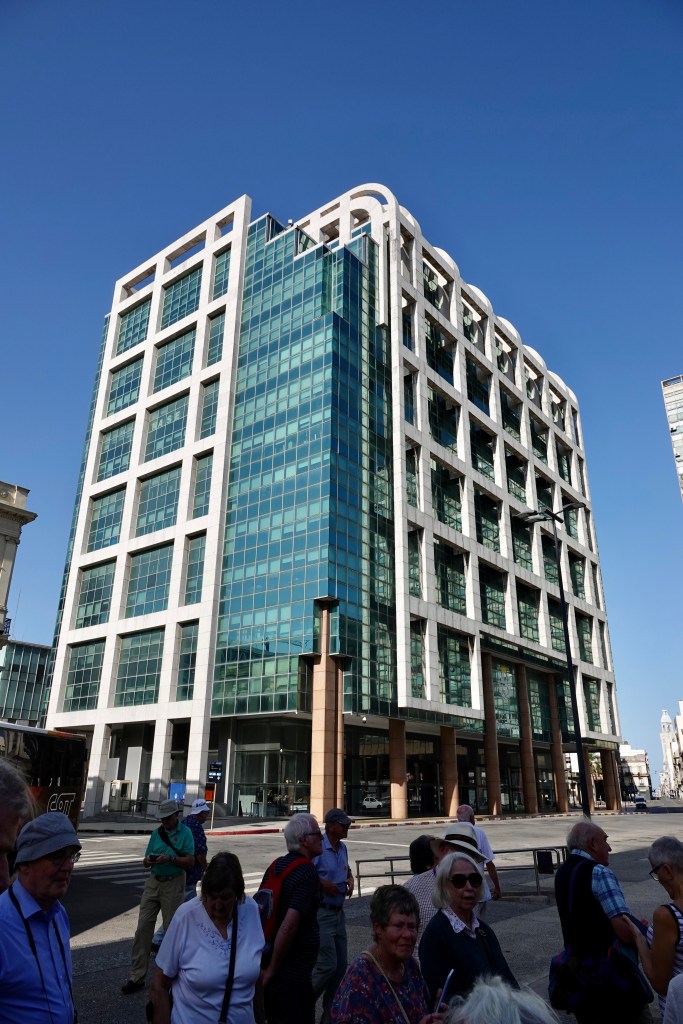
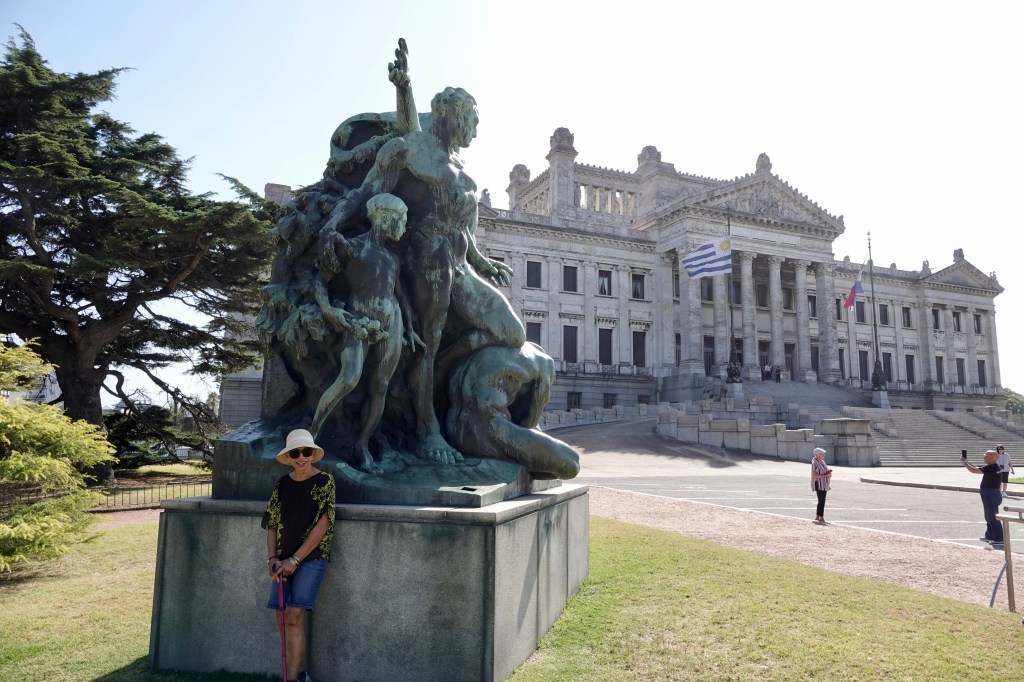
We then travelled to the parliament building, a large Greek-inspired edifice that, again, was very fine, but the surrounding buildings were a strange mishmash of odds and sods.
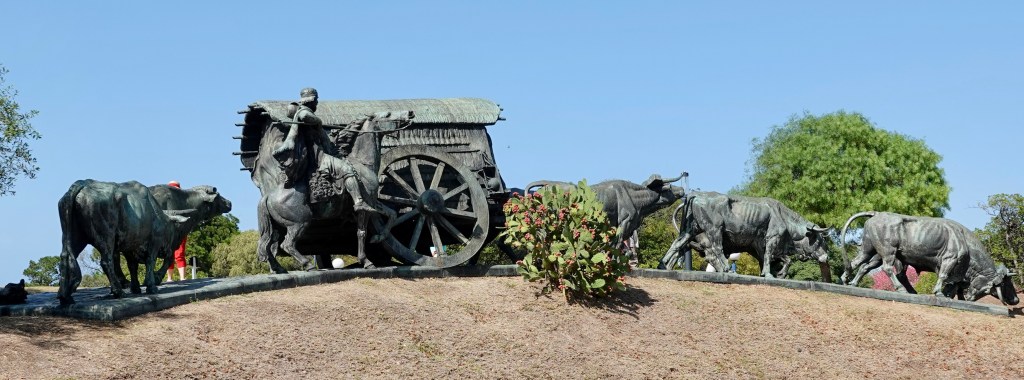
It was then off to a park to look at a sculpture of a wagon, drawn by oxen, representing the cattle industry that basically is the bedrock of the country. For those that remember Fray Bentos, that is actually a town in Uruguay, where the OXO cube was invented – and, presumably, corned beef.
The park is very close to the football stadium, where Uruguay won the inaugural World Cup in 1930. They won again in 1950 in Brazil, something our guide was still very proud of. We then toured by the beach, which all looked very nice before ending up at the old city, in particular, the old market, a converted railway station, which mostly housed restaurants selling barbecued steak and other delights. They are not allowed to use coal or coke, so they use wood, which gives the whole building a wonderful smell. Of course that meant that we just had to have something to eat, in Val’s case 7 huge langoustines and for me, a very large steak, both of which were absolutely delicious.
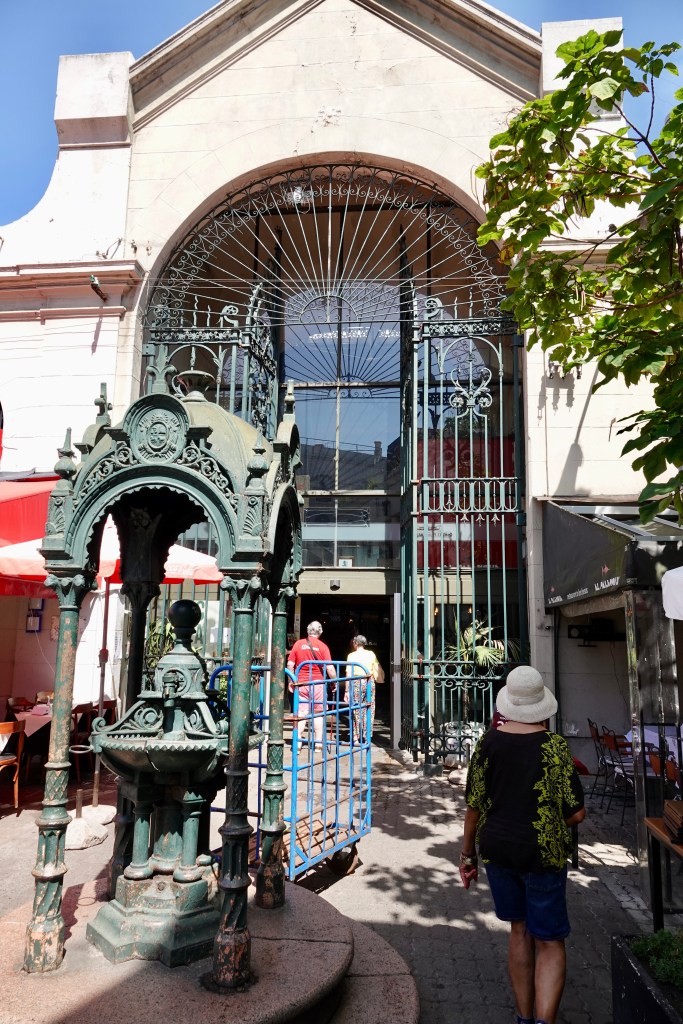
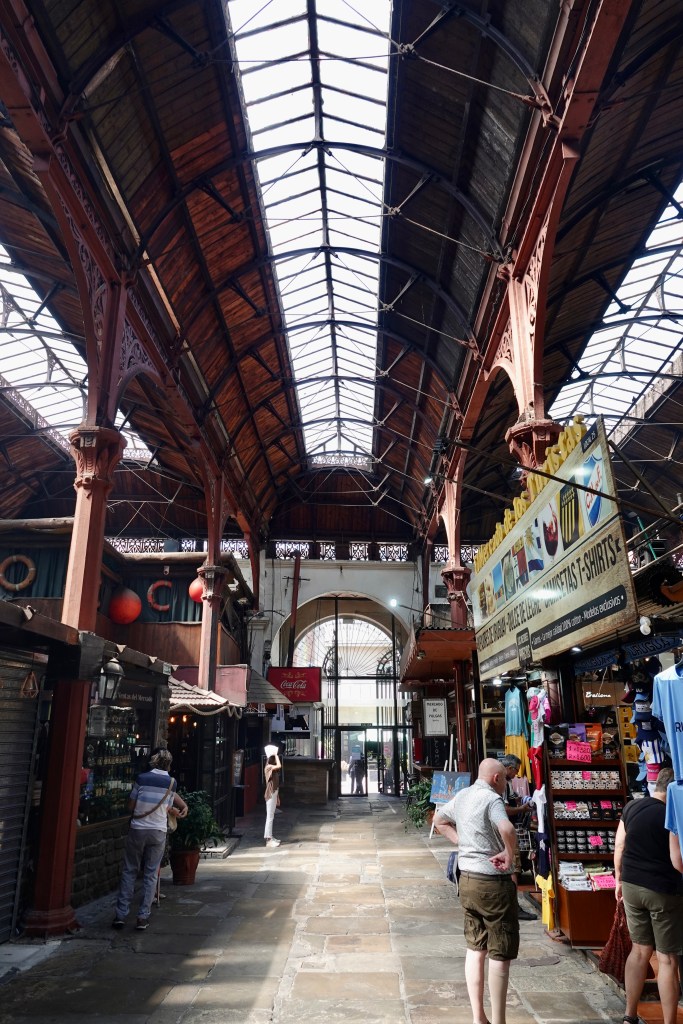

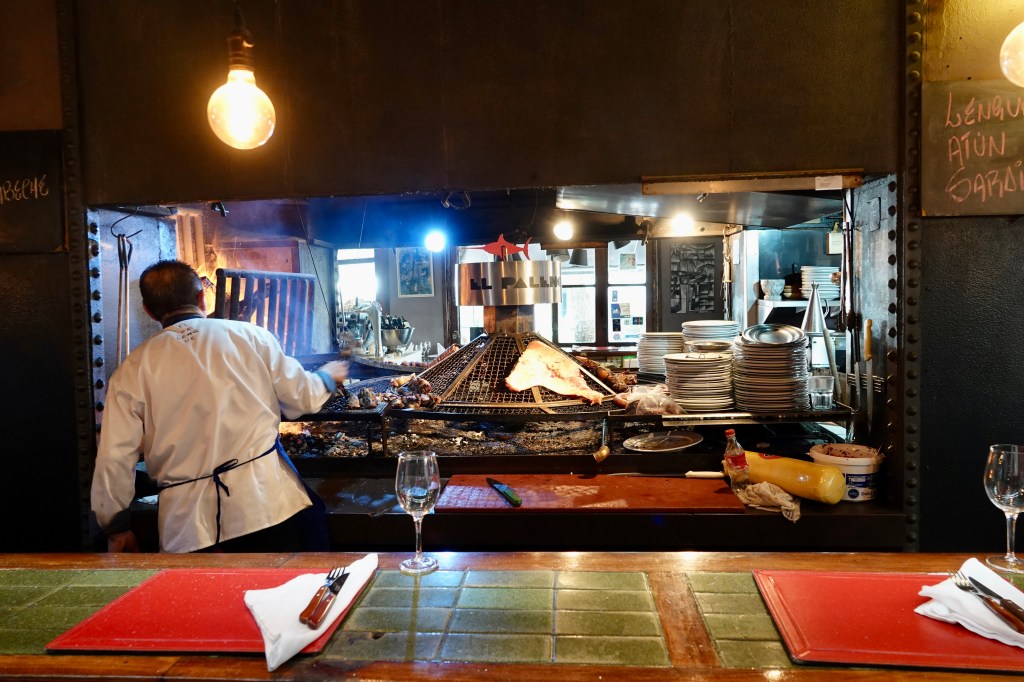
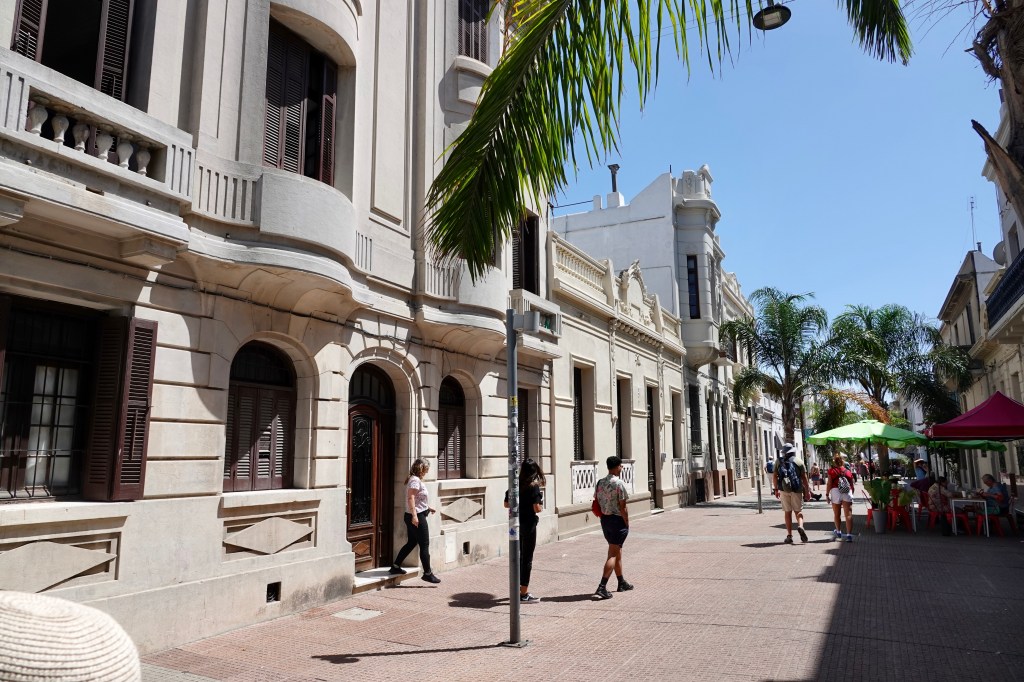
We then went for a walk through some of the old city, which seemed nice, though obviously very quiet as it was Sunday. It is a bit patchy and not always very well maintained, but had a good feeling and Montevideo did start to grow on us.
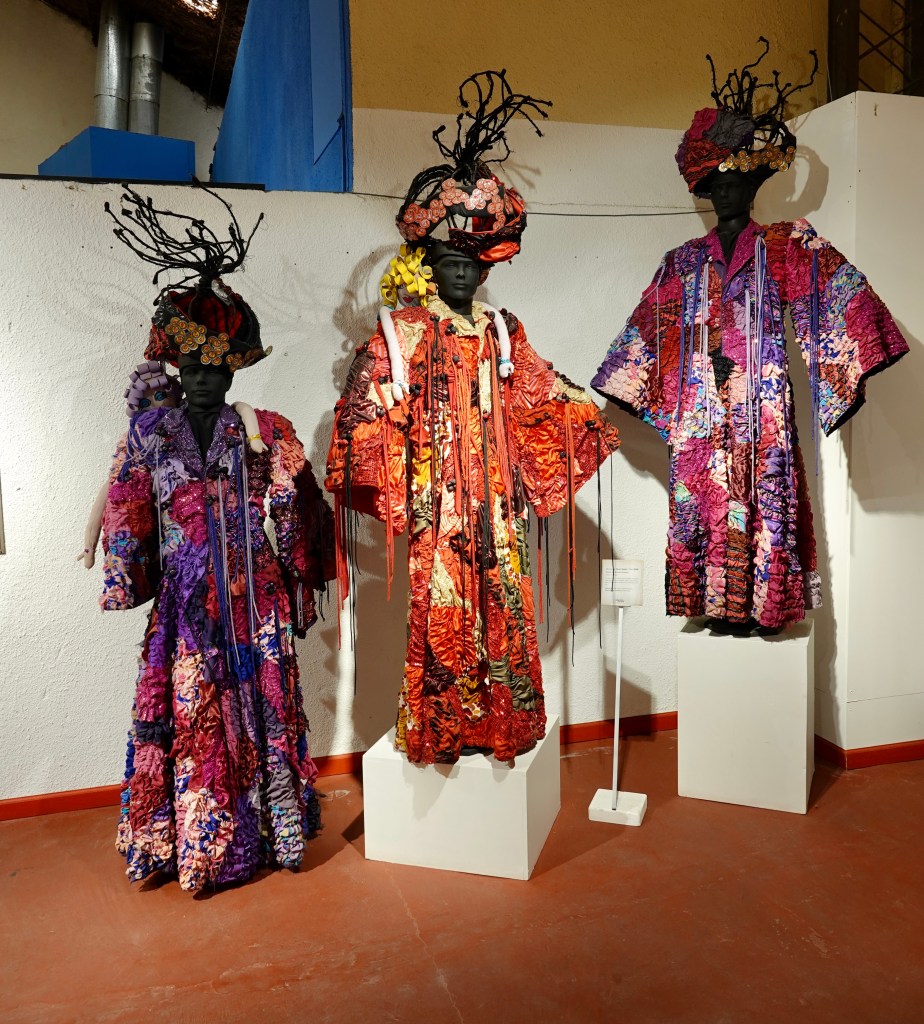
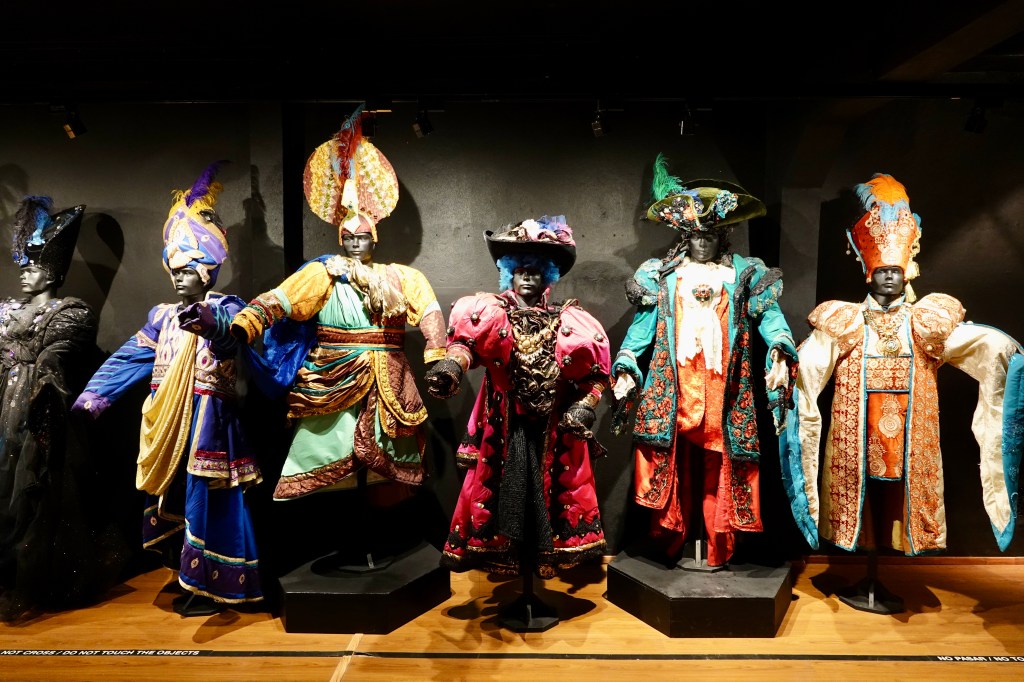
Finally we stopped off at the Museo de Carnaval. Carnaval lasts for 40 days and sadly we just missed it. It is well on a par with anything Buenos Aires has to offer apparently and the museum did at least give us a flavour of the work that goes into the costumes at least.
Overall, we warmed to Montevideo and it would be interesting to explore more of Uruguay. The city had a manageable feel to it though admittedly it was Sunday, so not wholly representative. However it’s possible biggest problem is being so close to Buenos Aires which thus makes it open to comparison, which I will cover in the next post.

 Mr Benn's Blog