7th – 9th March, 2023
We had 2 days at sea (Happy 70th Birthday to my dear sister, Lala for 7/7/23!!), which came as a bof a relief after our busy days ashore. However, one of the days was a full-on one as we had put our names down for any tours of the ship that were going and lo and behold, we were invited to 3 on one day!!
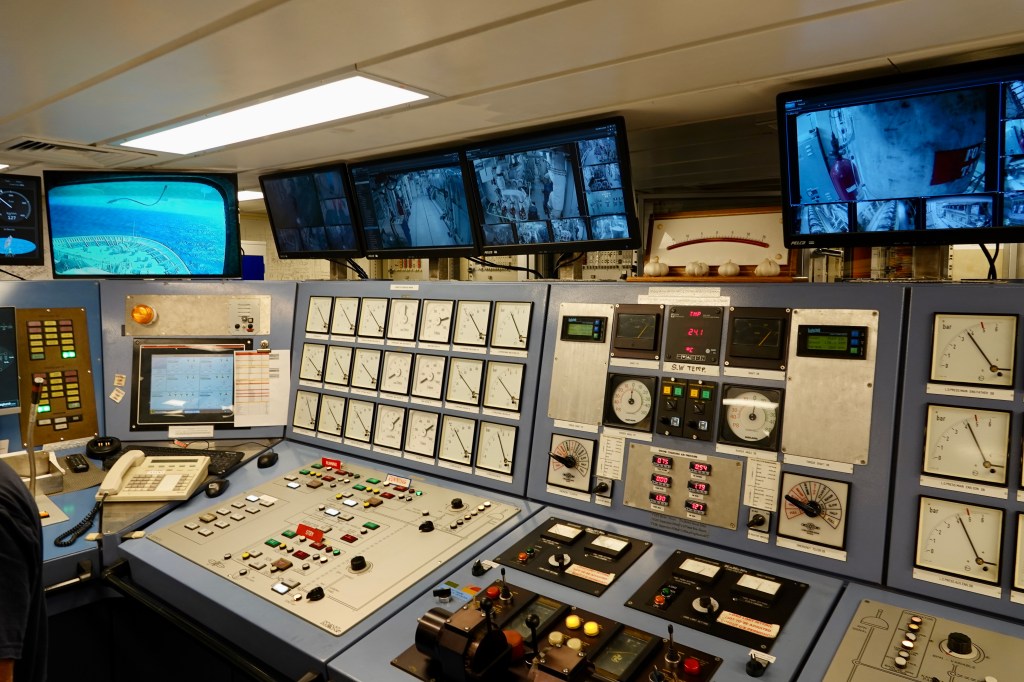
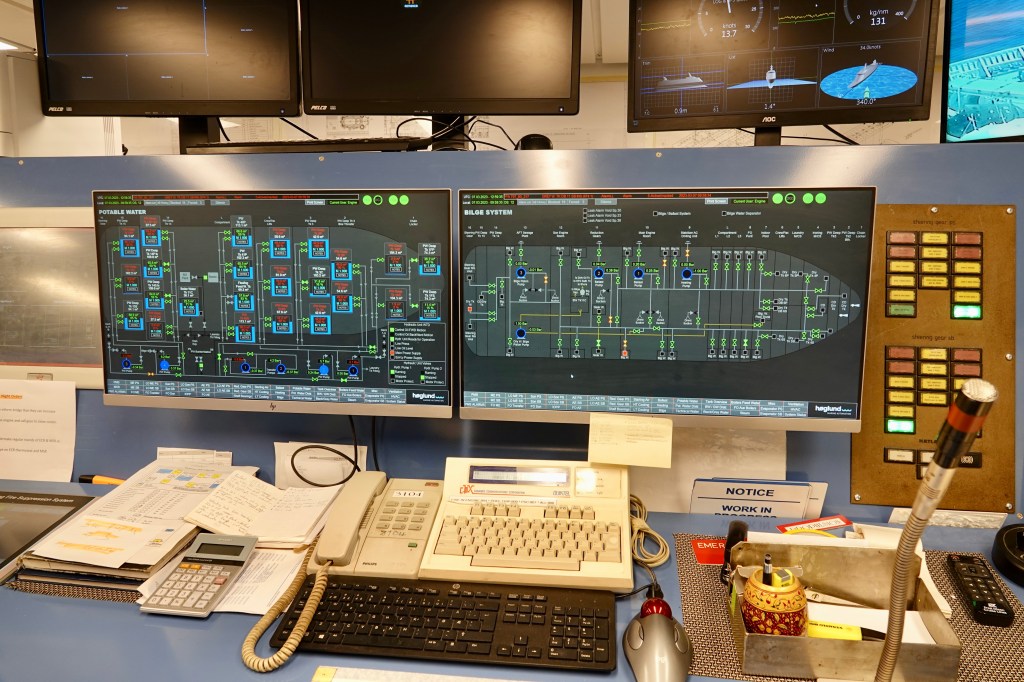
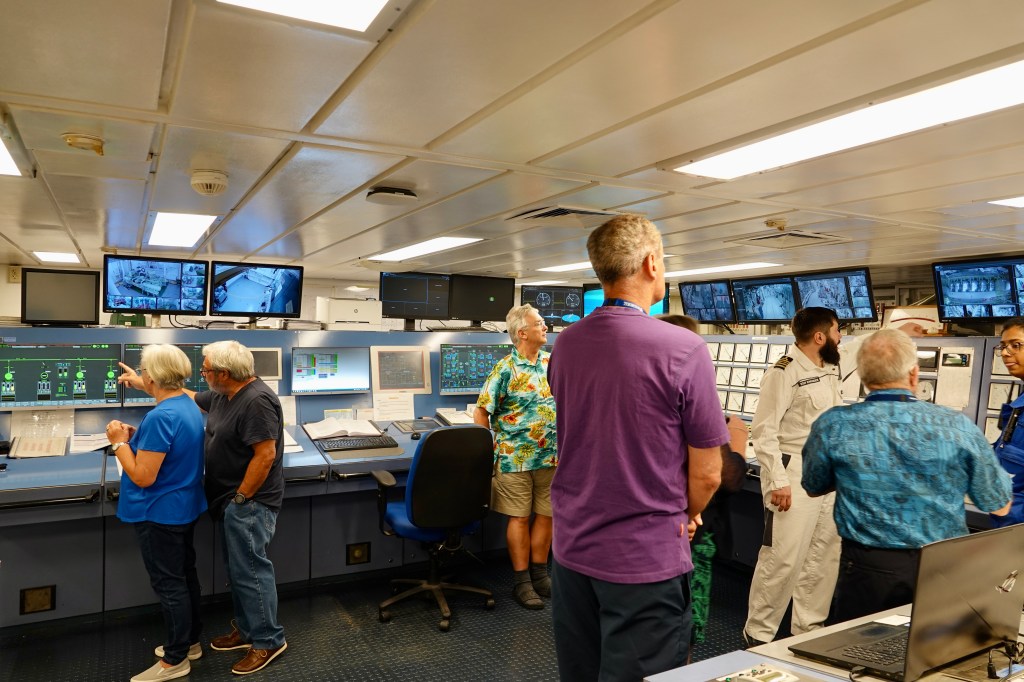
It started with a visit to the engine room or at least the control room. It was an interesting mixture of old and new technology. Balmoral is a relatively old ship so i presume it might be a case of if it ain’t broke, don’t fix it.
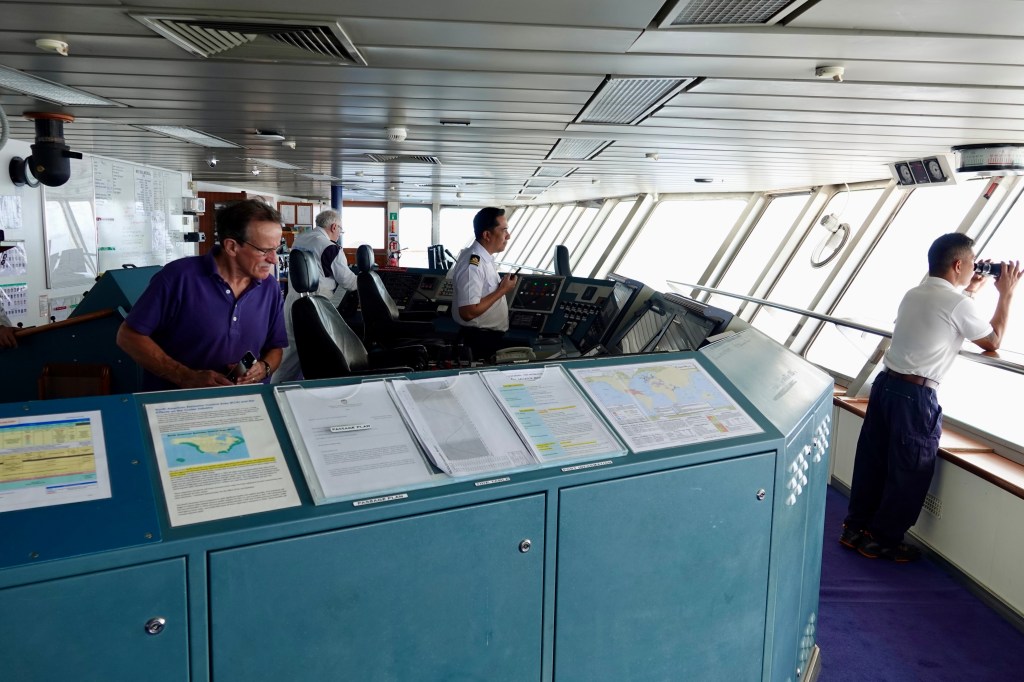
Next was a visit to the bridge with the cadet, Jack, who was both delightful and informative. Apparently, Balmoral being quite a small ship, has a proportionately small bridge. It was interesting, considering all the technology, to see someone with a pair of binoculars staring out into the wide, blue yonder. They also have a hand-written logbook, though that is backed up by the nautical equivalent of ‘black boxes’.
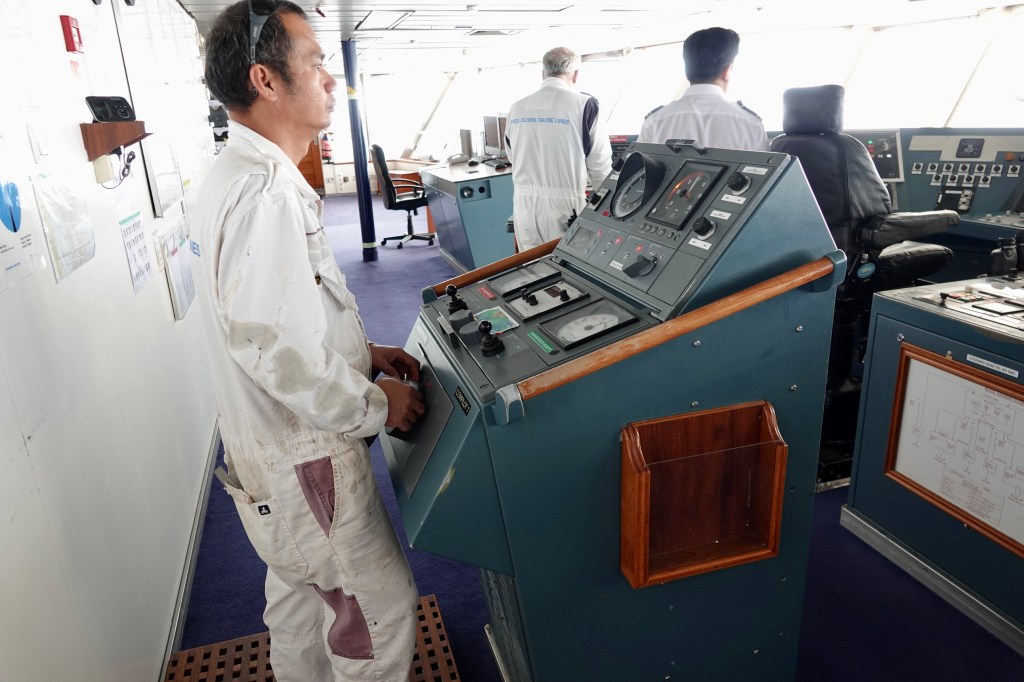
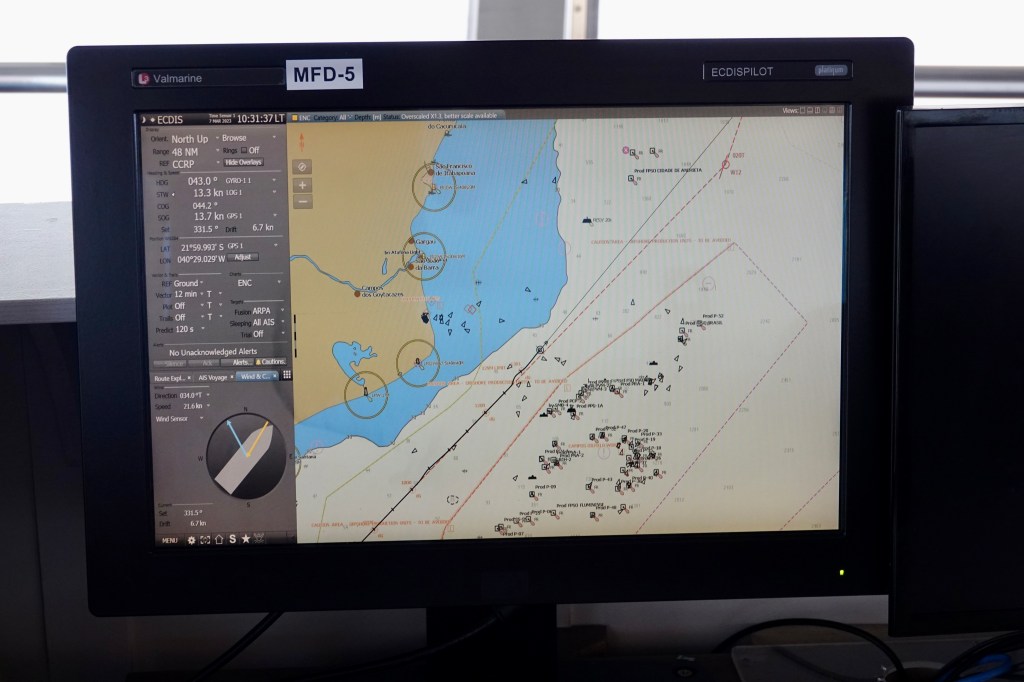

We did have a break during which we watched the crew swimming competition (to raise money for the RNLI), which was great fun and cheered along by a very enthusiastic crowd.

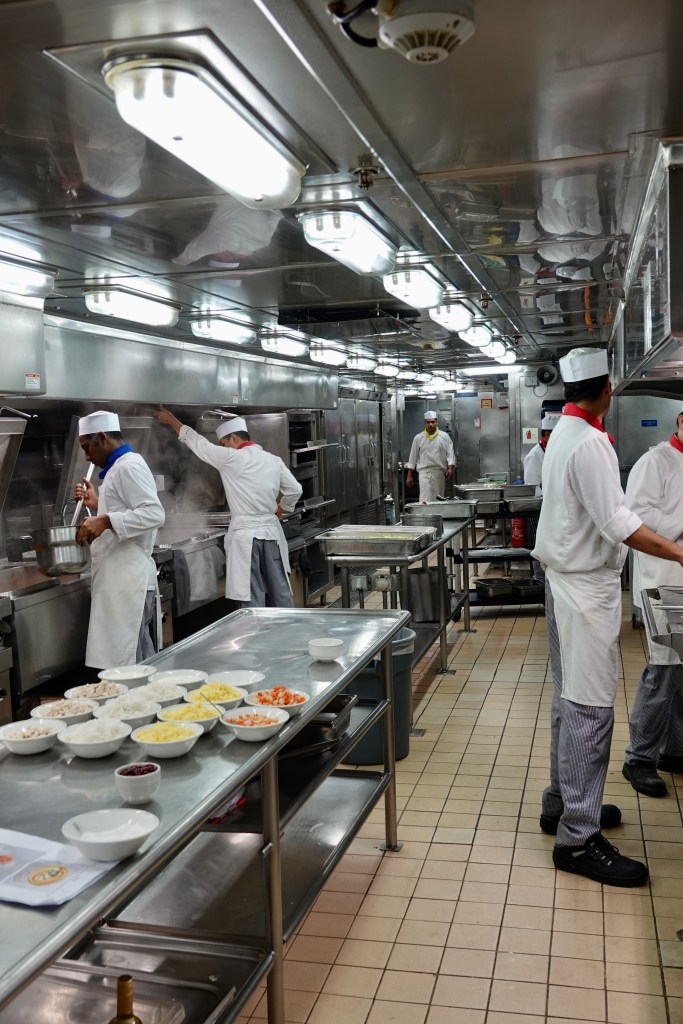
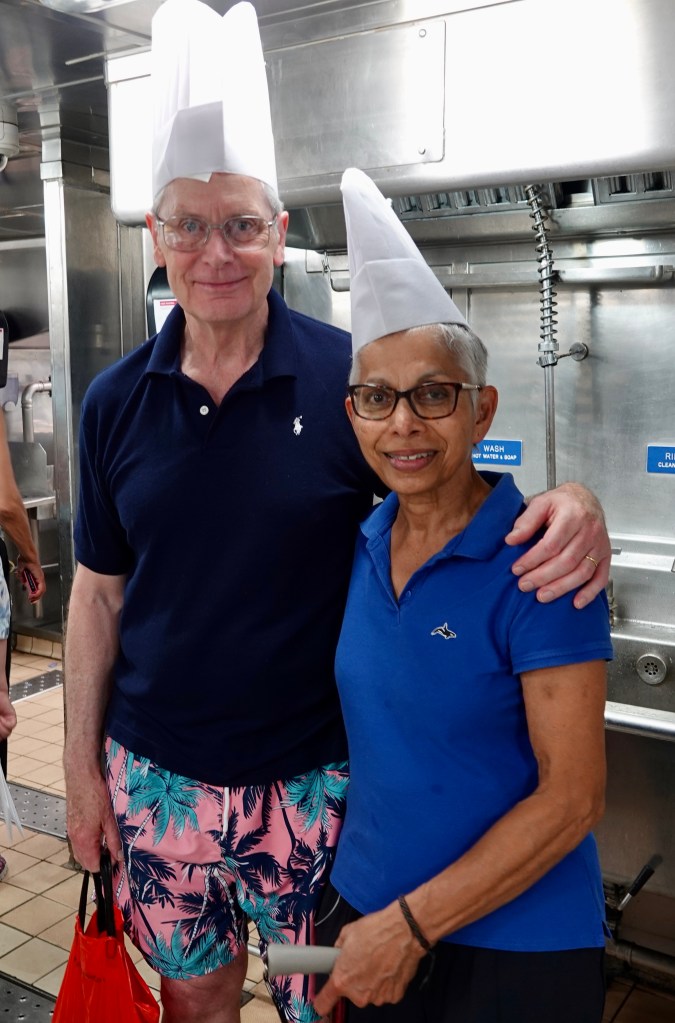
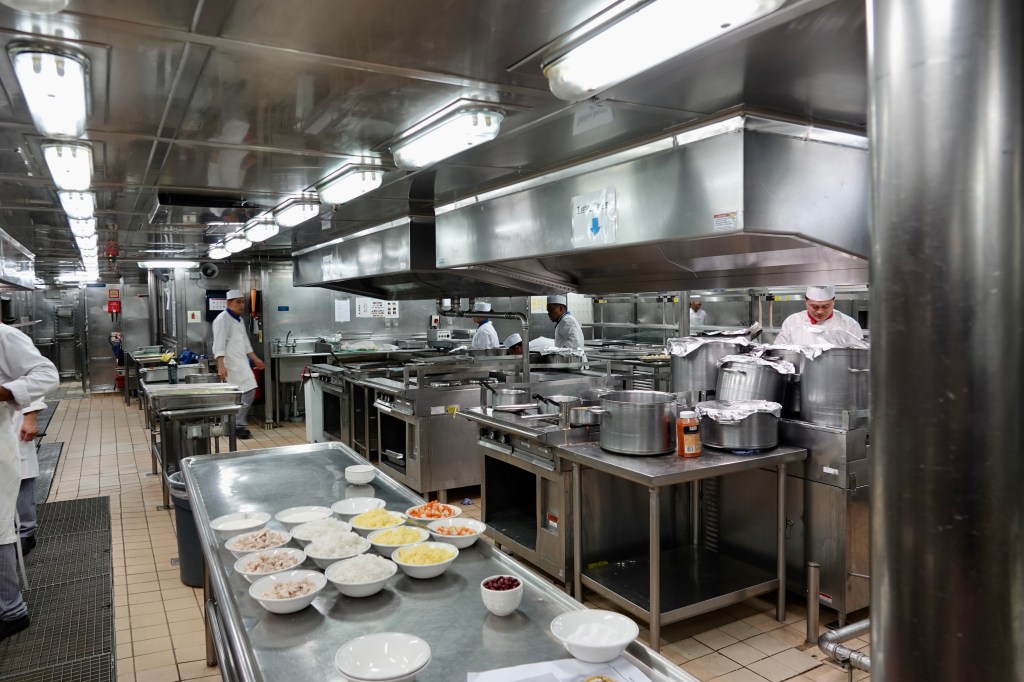
Next stop was the galley. There is one main one and a number of subsidiary ones on different decks for the different restaurants. As mentioned, Balmoral is a fairly small ship, but even so they still have to produce around 3,000 to 4,000 meals a day. The logistics are staggering as they obviously do not bring all the food with them from England, so have to organise collection at the various ports we visit on the voyage – and that depends whether they are available at a sensible price. Apparently mushrooms were in the region of £44 per kilo in Brazil (good news from my point of news!)
On the 9th, it was off the ship again though at the rather extraordinary city of Salvador da Bahia on 9th March. It used to be Portugal’s colonial capital city and is the heart of Brazil’s Afro-Brazilian community. It is also Brazil’s 3rd largest city at around 4.3 million (some say 4th largest – to be confirmed). Whatever, it looked big!
For a bit of background reference, from 1550 to 1888 (Brazil only abolished slavery in 1888), about 3.5 million people were shipped to Brazil – almost 40% of the total that came to the New World. Salvador was one of the cities where they landed and there is, according to my guidebook, ‘no other place in the Western Hemisphere where the culture of those brought as enslaved people from Africa has been preserved as it has been in Salvador – from music and religion to food, dance and martial-arts traditions’.
The latter is the Capoeira Angola which combines martial arts, acrobatics, dance and music devised in the 16th century by enslaved Africans. They were forbidden by the Portuguese from practising martial arts so Capoeira was created to avoid these laws.
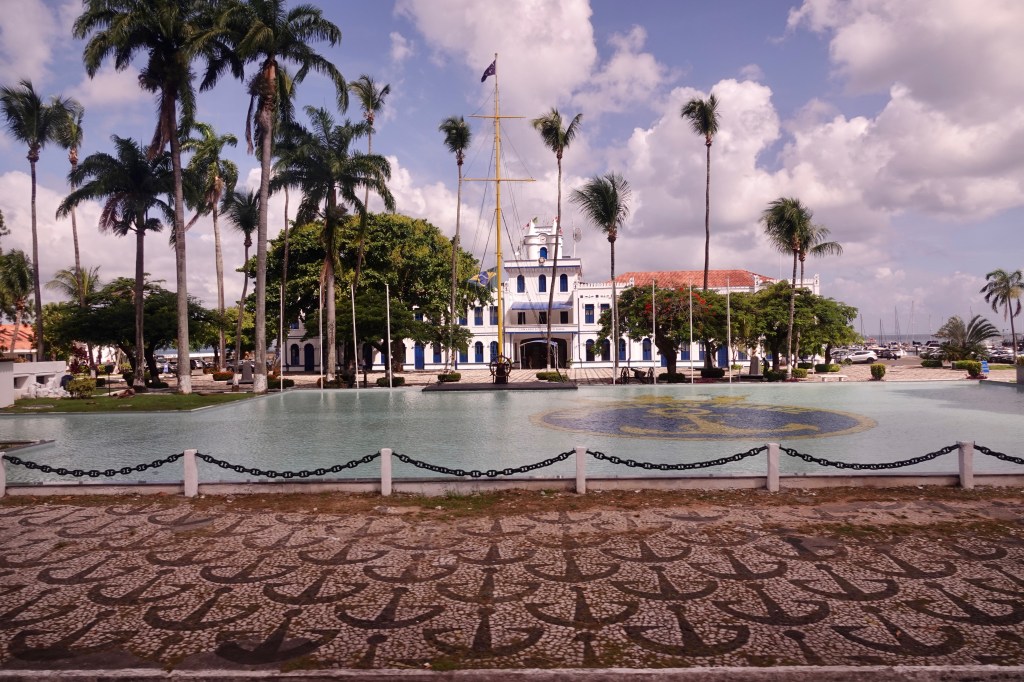
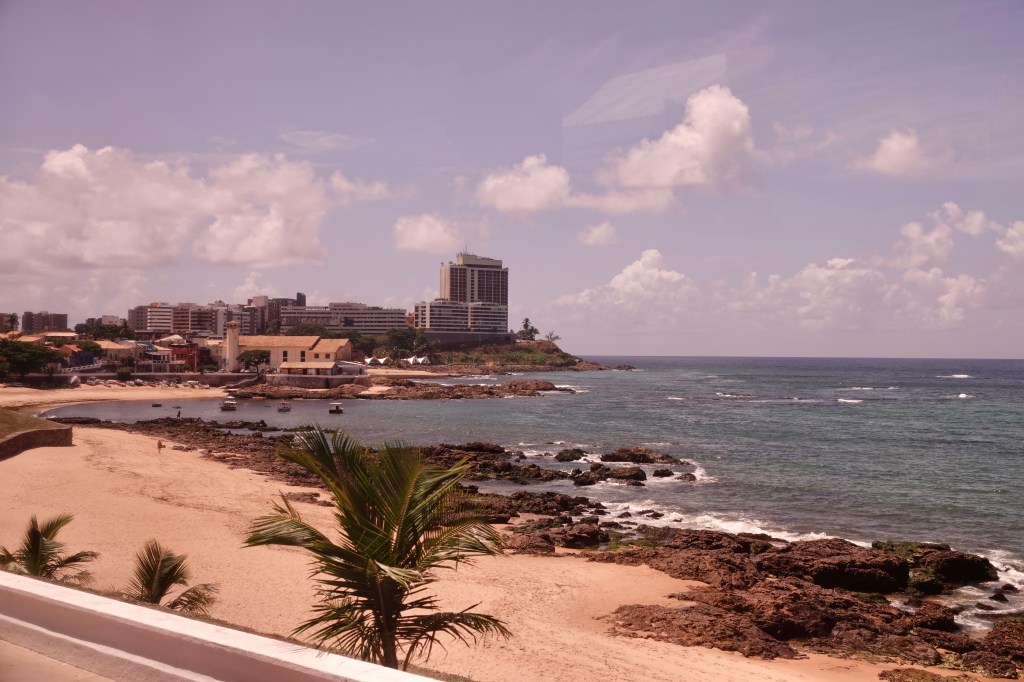
Val and I had signed up for a highlights of Salvador tour, which covered most of the city other than the old and heavily restored Cidade Alta (or Upper City) where the UNESCO World Heritage site is located, about which more in the next post. Instead we were taken down the coast past the wealthy area and the Yacht Club where there are a large number of quite smart apartment blocks looking out over the ocean. This is the area called Barra Hill and one part is named after Queen Victoria, who was much admired apparently. Quite a few British came to Salvador in the 19th century.
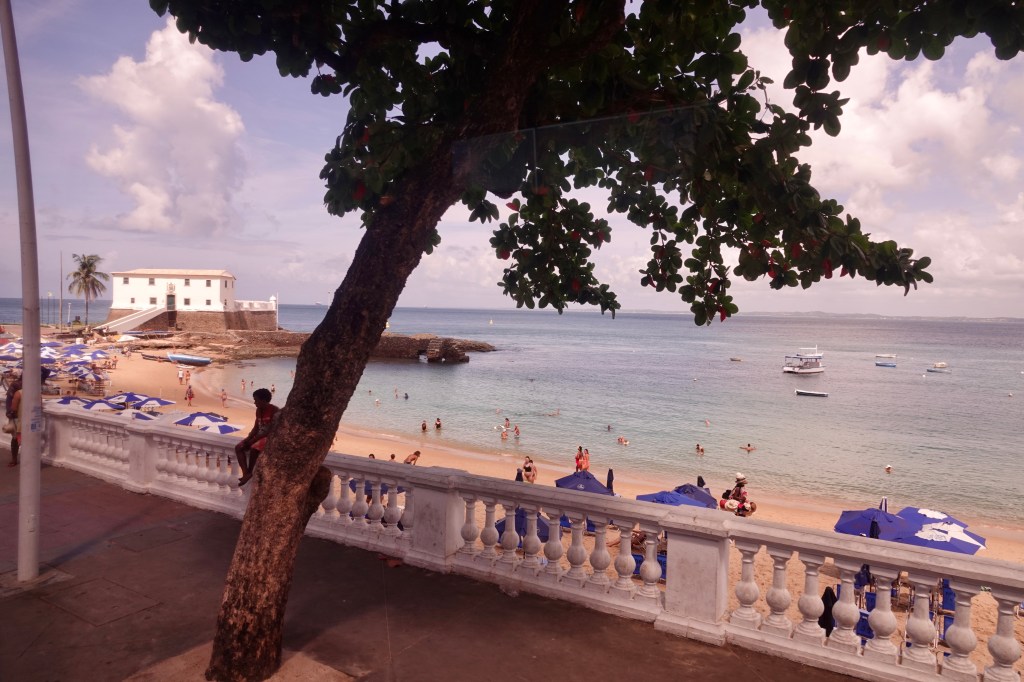
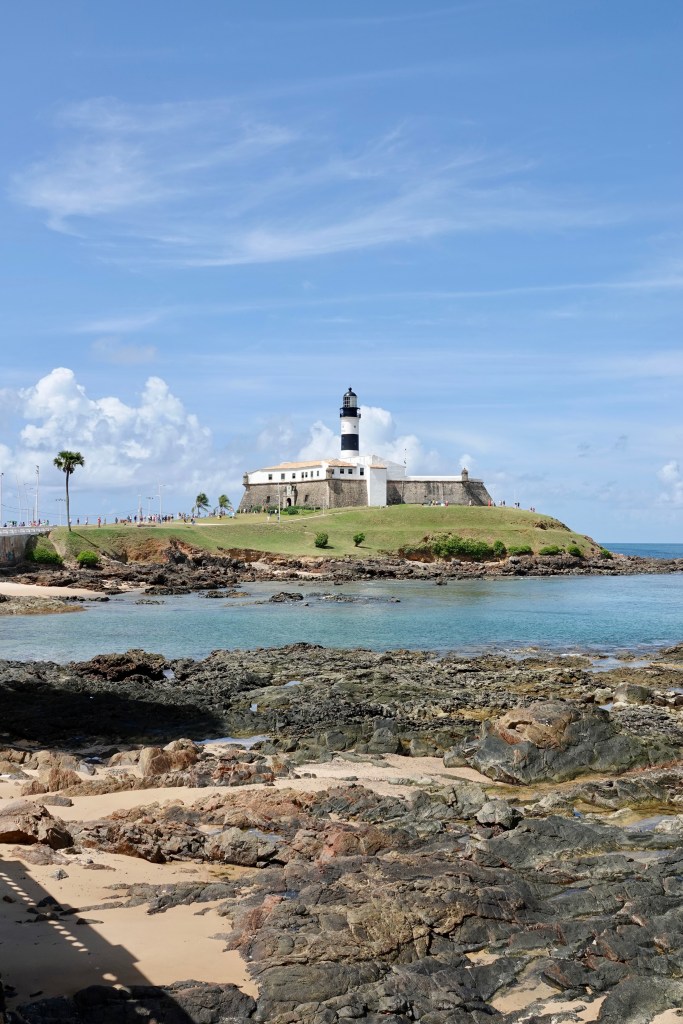
We stopped at the Farol da Barra, the oldest lighthouse in South America, at the Forte de Santo Antonio da Barra, built in 1698.
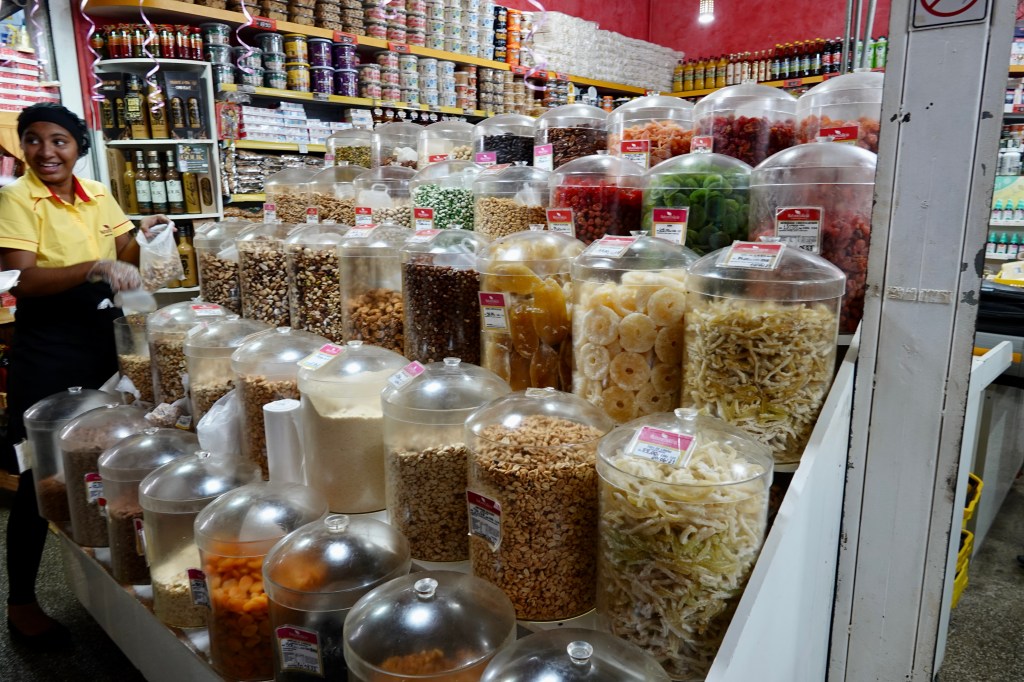
We were then driven in the excellent, air-conditioned coach with superb Wi-Fi (which is why you suddenly received a spate of posts) to a local market where we were able to pick up a few snacks for the cabin.
Off again, passing a small temple (oddly, perhaps, situated next to a church), dedicated to the Candomble sea goddess, Iemanja, an African goddess whose alter ego is the Virgin Mary. By the way, many of the words above and probably below should have accents, but without the internet I cannot produce them.
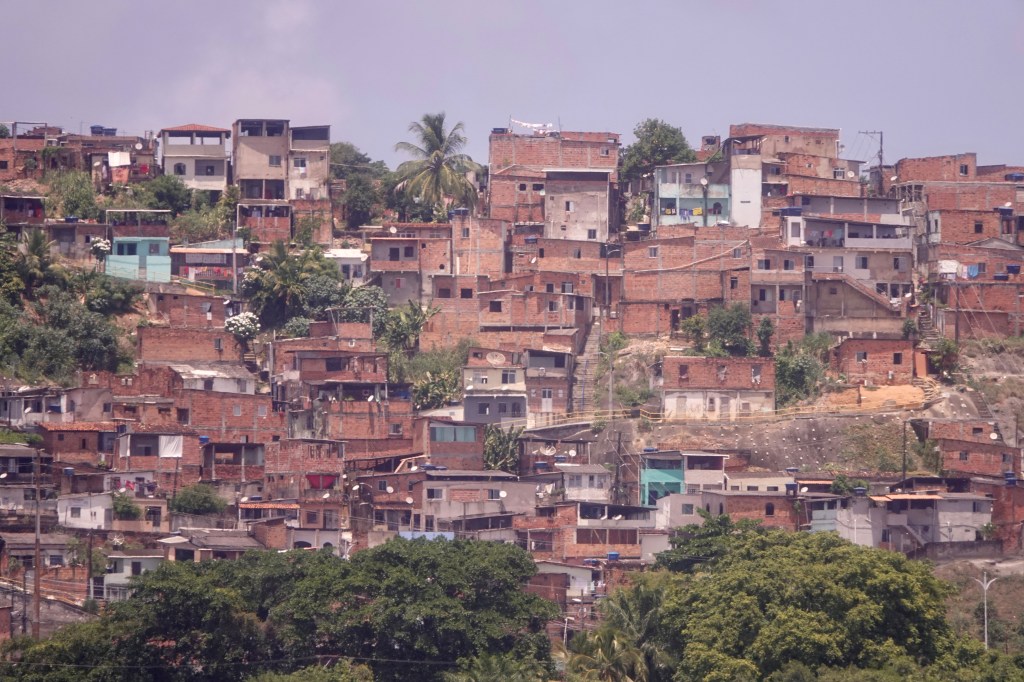
We passed several areas that were not smart and looked pretty rundown and were effectively favelas and it was sobering to remember how many people have to struggle for their daily bread.
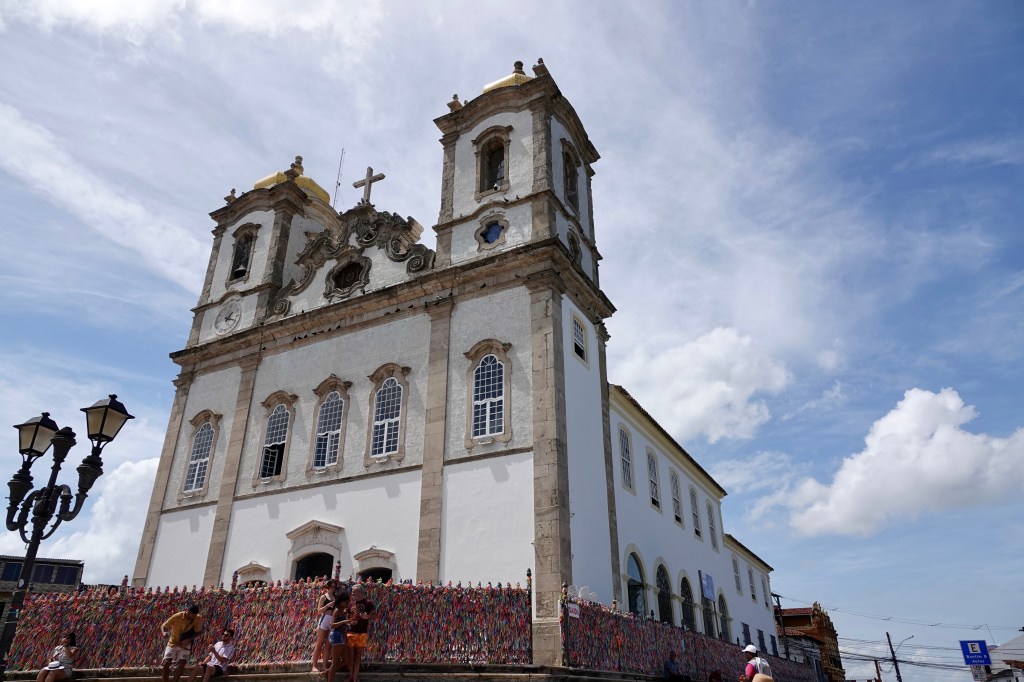
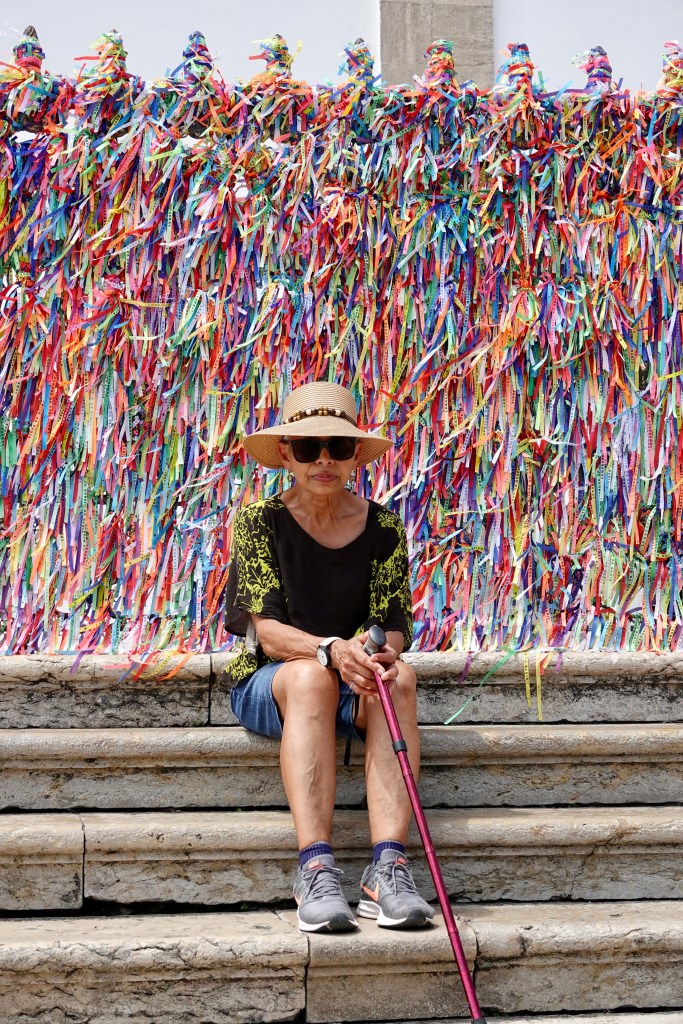
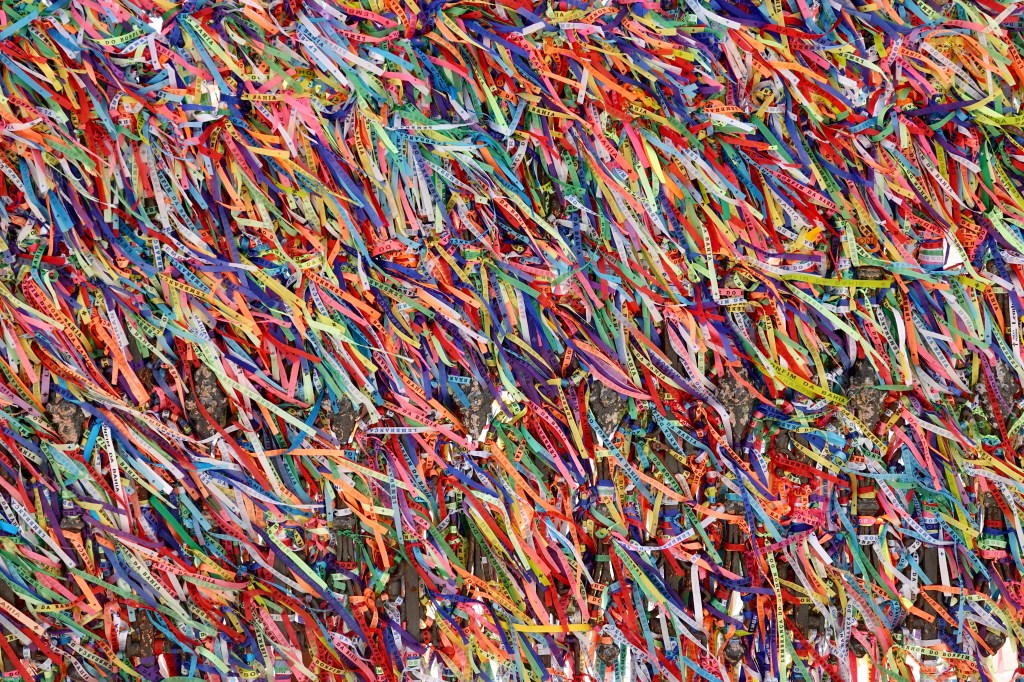
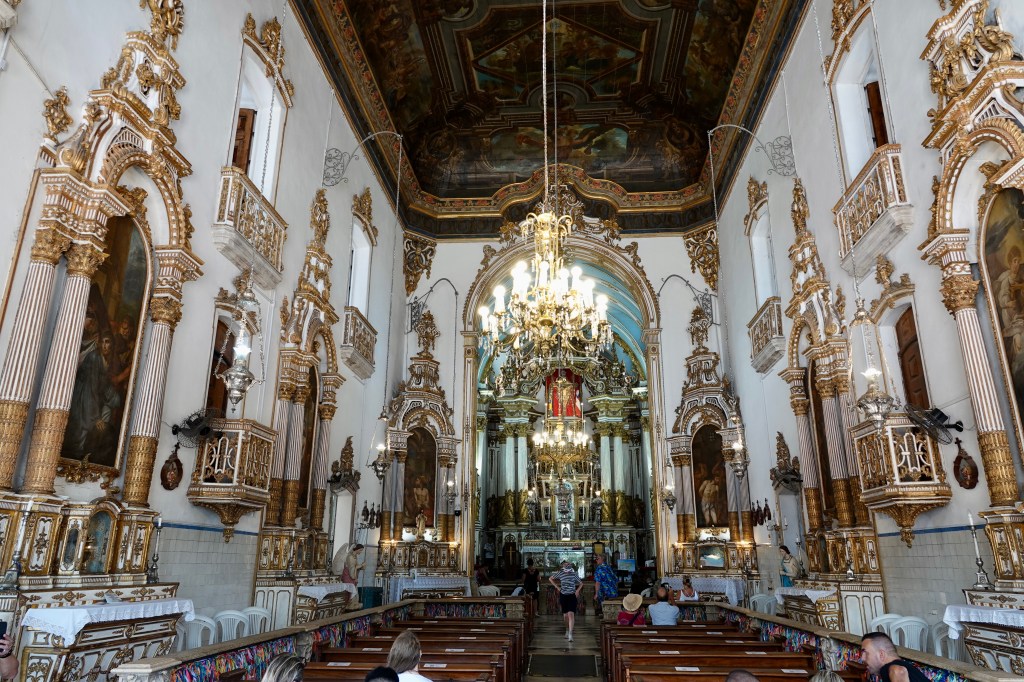
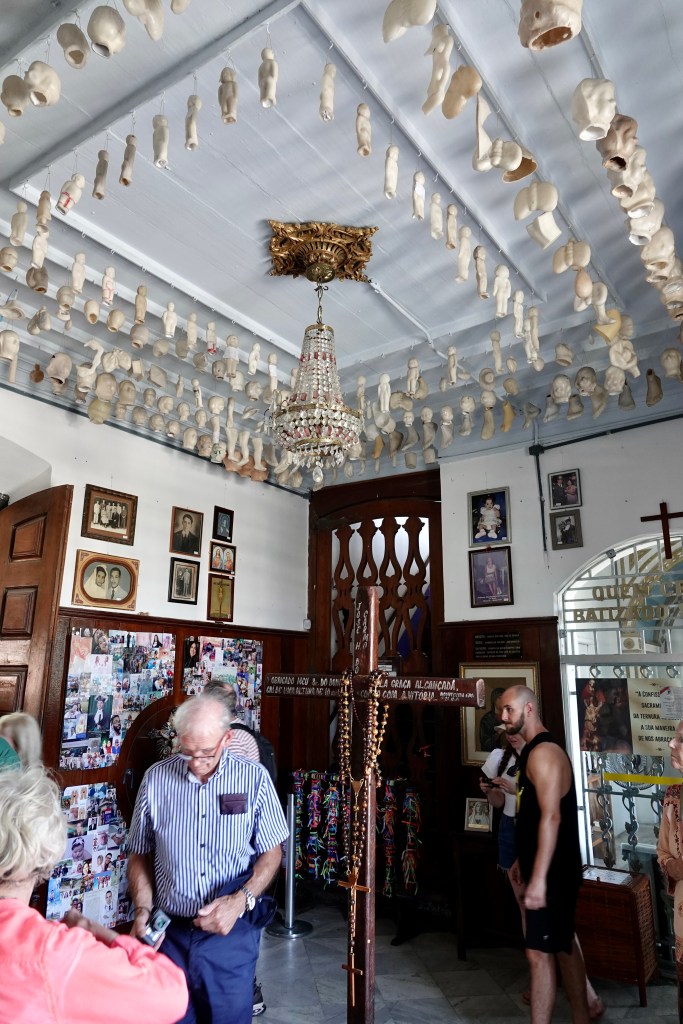
We were treated to an ice cream at the legendary (apparently) ice cream shop, Sorveteria da Ribera before making our way to the pilgrimage Bonfim church, which translates as the church of good endings. This is where you come to pray for a good result be it an operation of exams or your driving test. People tie fitas or coloured ribbons to the railings and hope for a good outcome.
That was pretty much it for the tour, though Val and I did visit a large arts and craft market and then Val went back to the ship and I made my way to the Upper City, about which I will write in the next post.

 Mr Benn's Blog
Many thanks for the birthday wishes, John – and indeed for the facetime!!! Considering all you covered in the last few days, I am impressed you found the time. It was a wonderful surprise! Great to see behind the scenes on the ship – you are right about it looking slightly dated. SO glad I don’t work in the kitchen! I like the idea of a Church for good endings! And the fence of Fitas is amazing. Salvador looks a very interesting place! L xoxox
LikeLike