9th March, 2023
Well, I am sorry if this is out of sequence and you have already read the post on Recife, but something odd happened in the cafe in Mindelo, Sao Vicente, Cape Verde where I was trying to upload the photos on an increasingly weaker Wi-Fi and where the original post for this disappeared into thin air. No idea why or how, but there we are. And of course, I can’t remember what I wrote about the Upper Town, so I will have to start again.
So, I left Val at the ship as she had had enough touring for the day and bumped into Donald and Ray, fellow guests on the ship and all 3 of us set off for the funicular railway or Plano Inclinado to ascend to the Upper Town where the UNESCO World heritage site is. You can also opt to take the Elevador Lacerda, 4 rather fine Art Deco lifts. Amazingly the Jesuits first installed a rope-and-pulley lift in 1610.
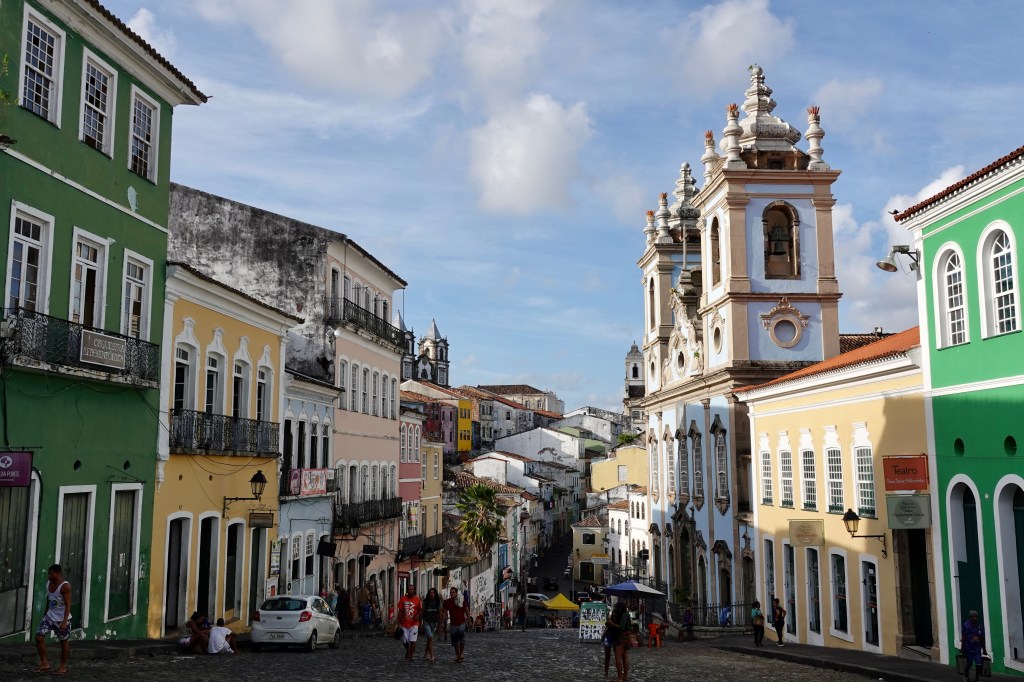
The actual area where the main restored historic buildings are is called Pelourinho, meaning ‘pillory’ in Portuguese and was where those who were up for punishment, be they deemed to be criminals or slaves were exhibited and sometimes flogged. So a somewhat grim past.
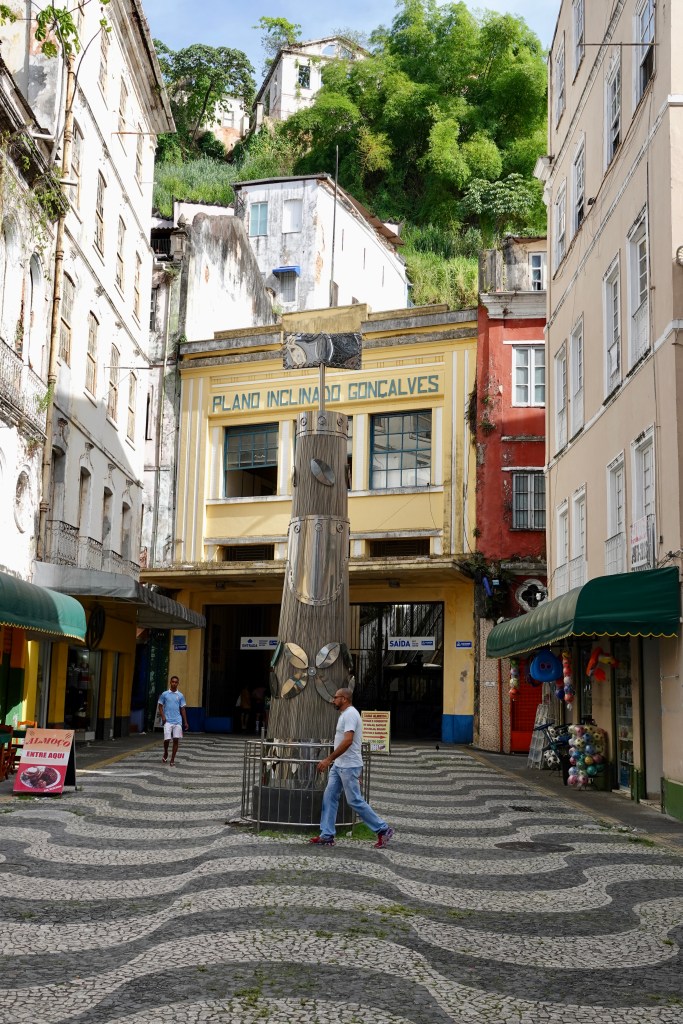

We arrived at the top and I made my way to what appeared to be the main square,, where I found the cathedral.
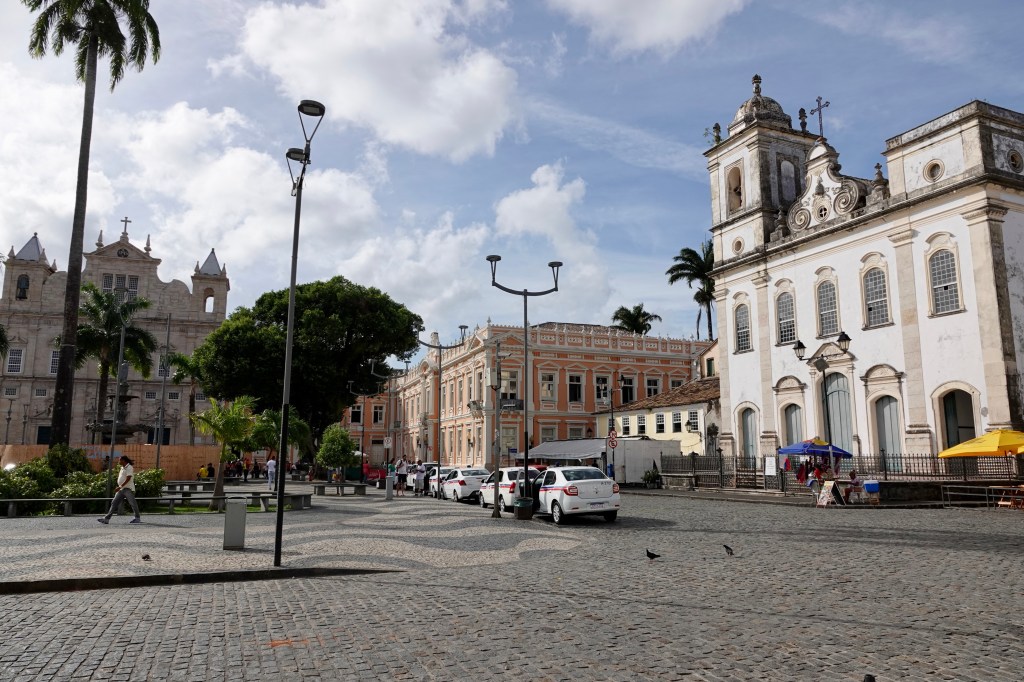
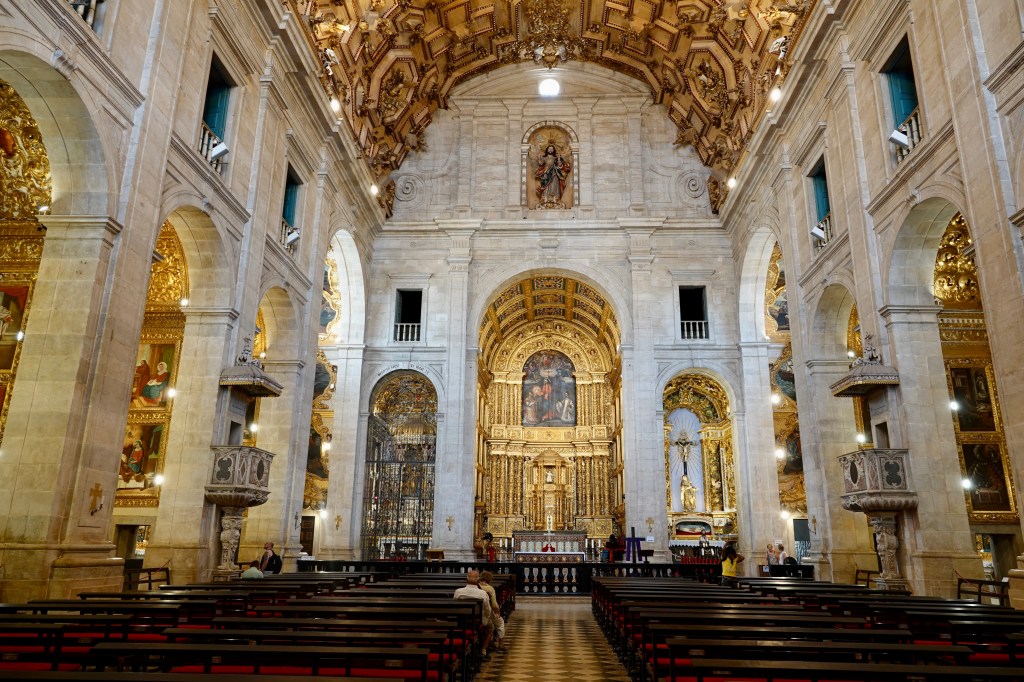
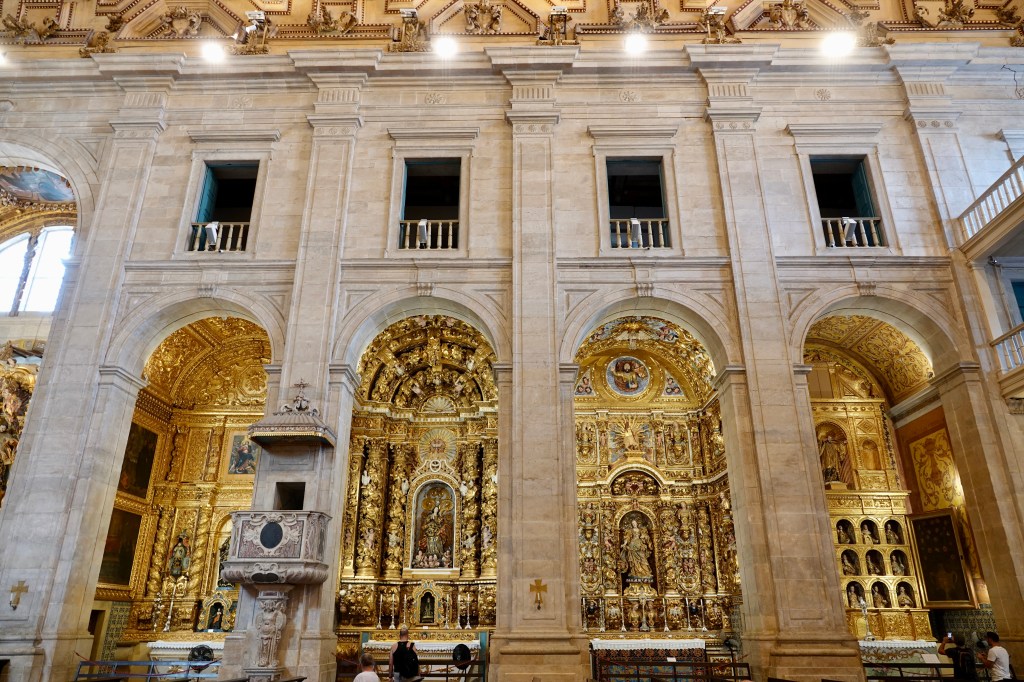
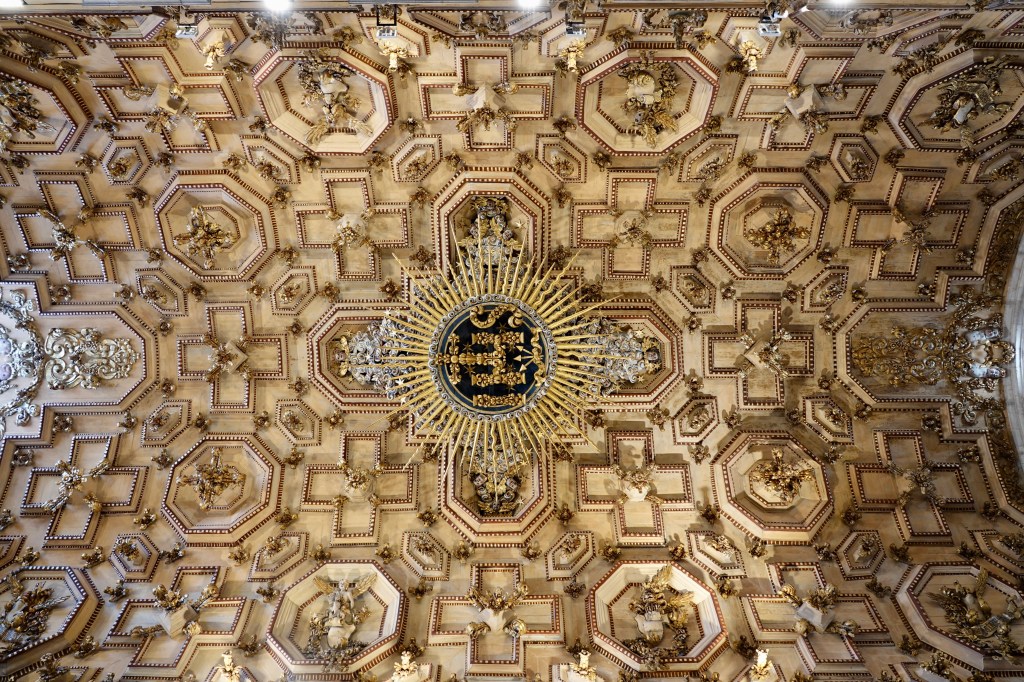
The main square has a lot of fine buildings (including a monastery) all of which have been restored to a high quality.
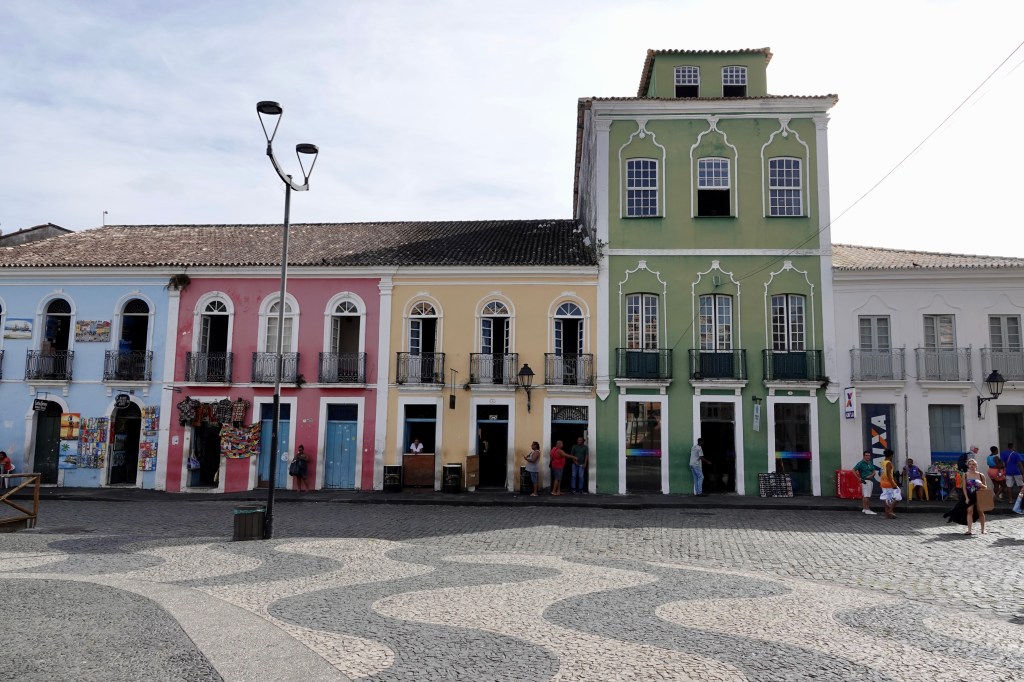
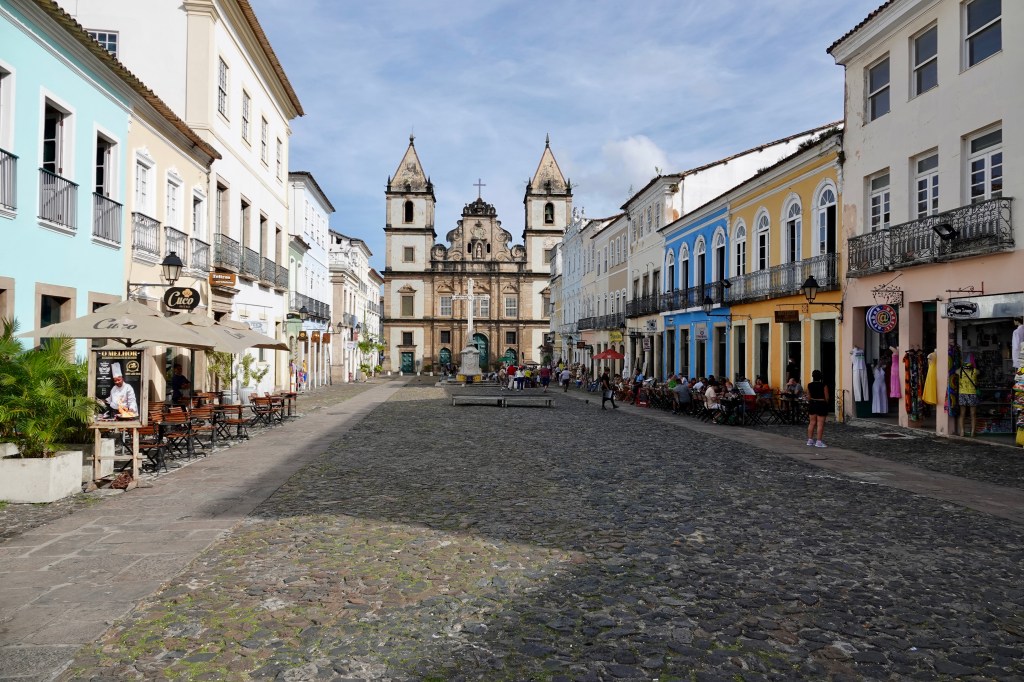
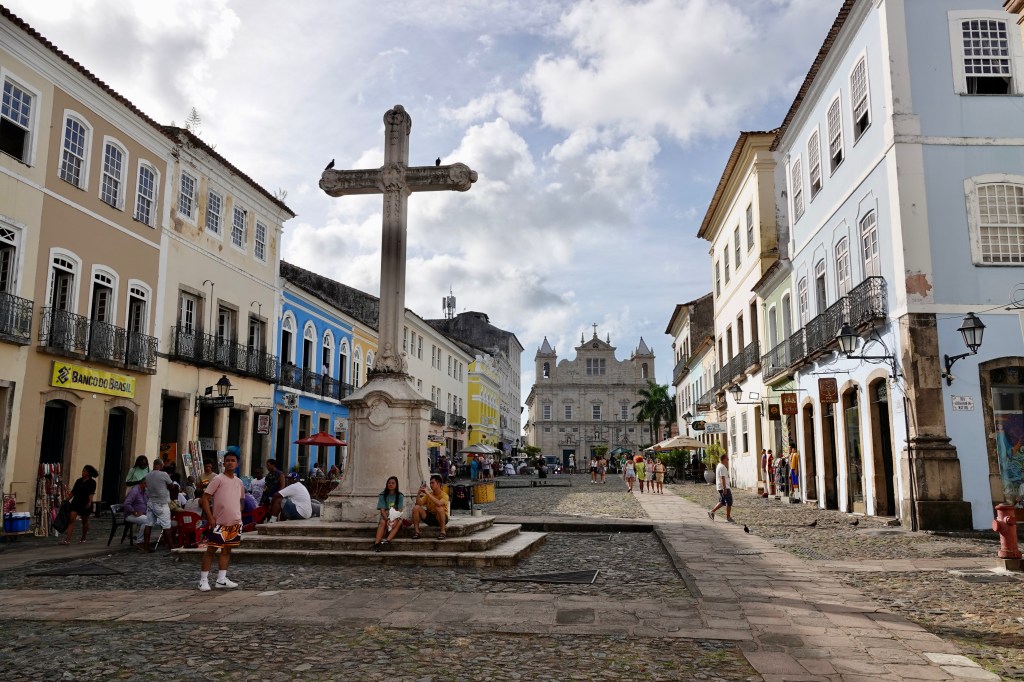
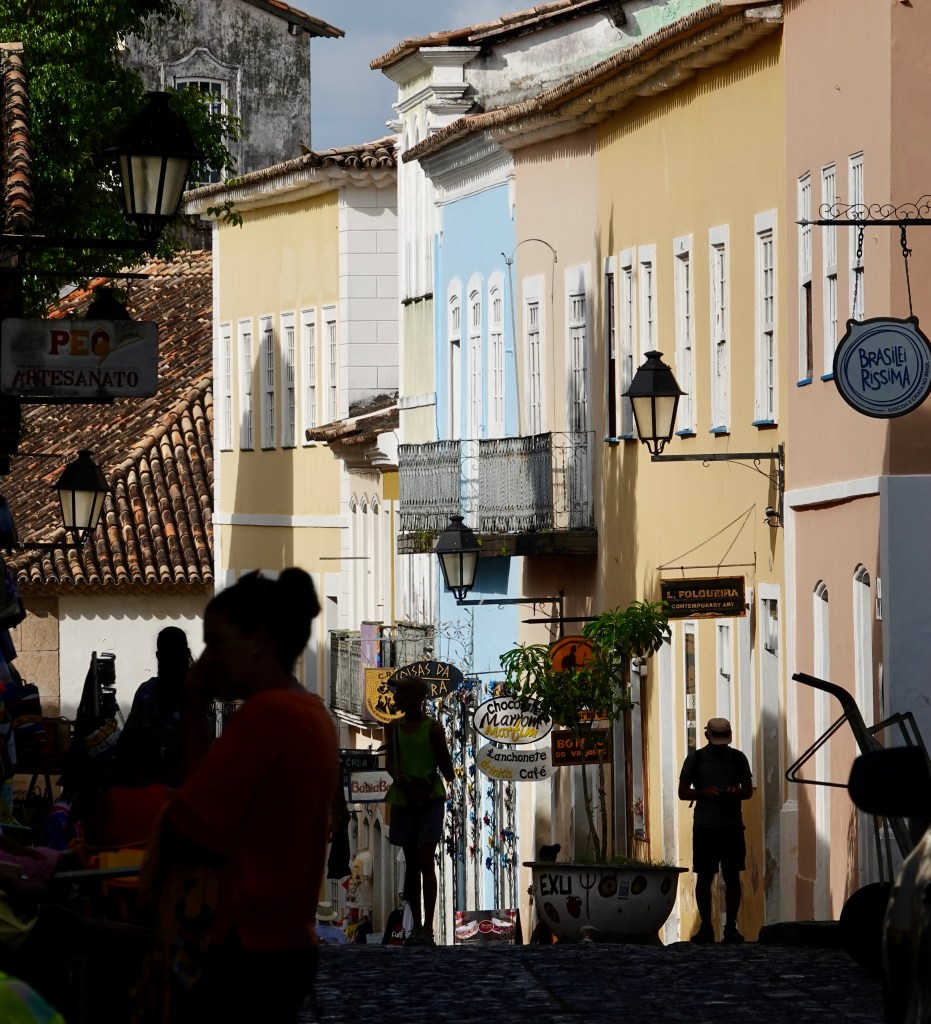
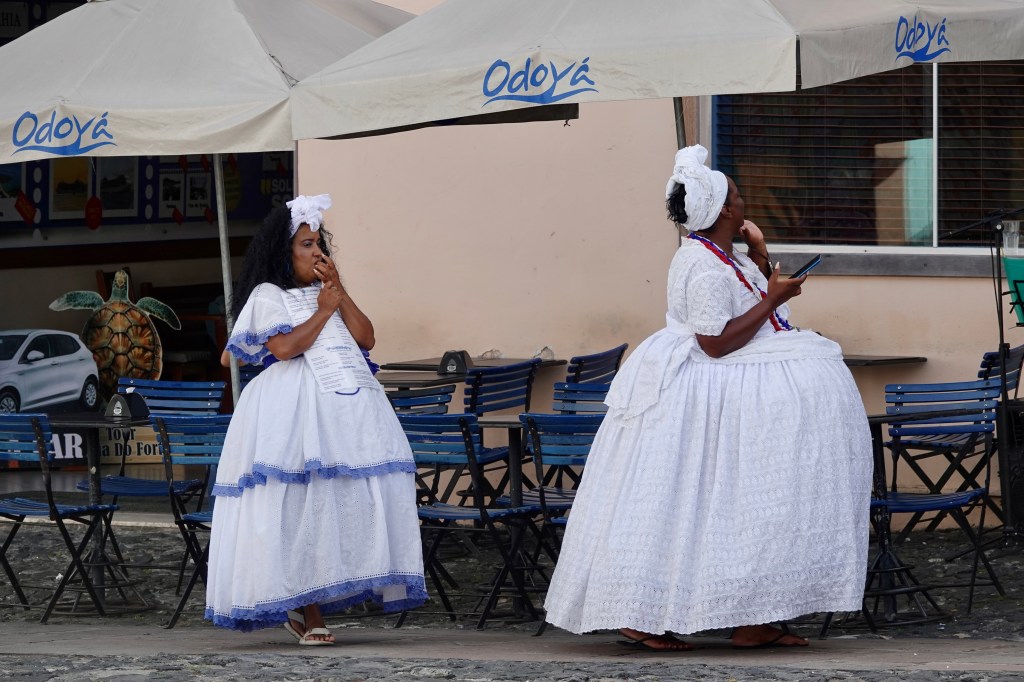
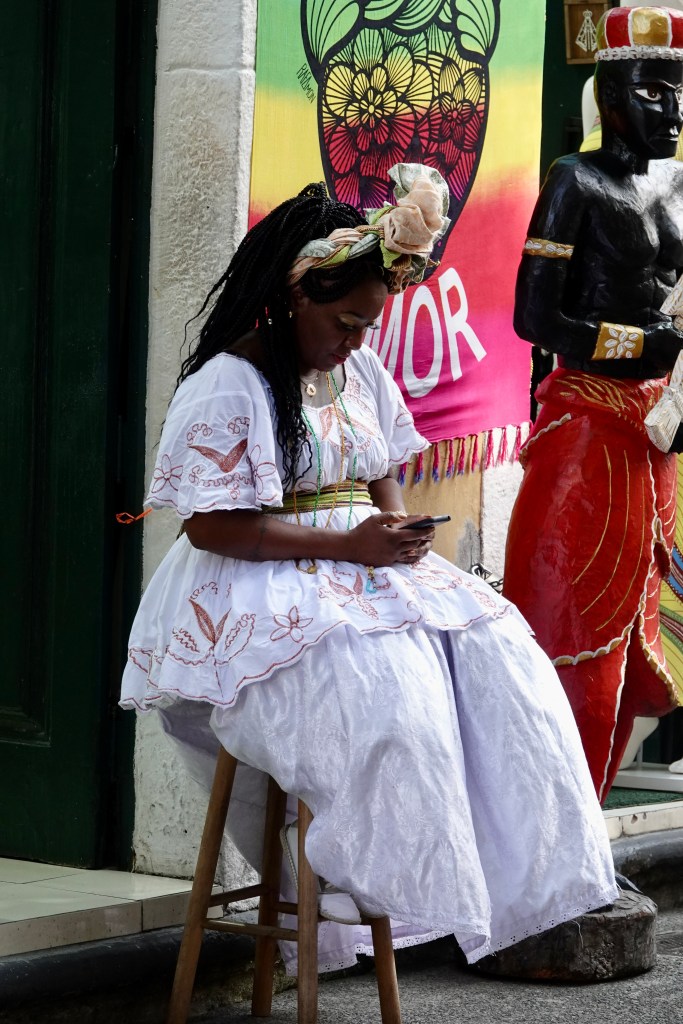
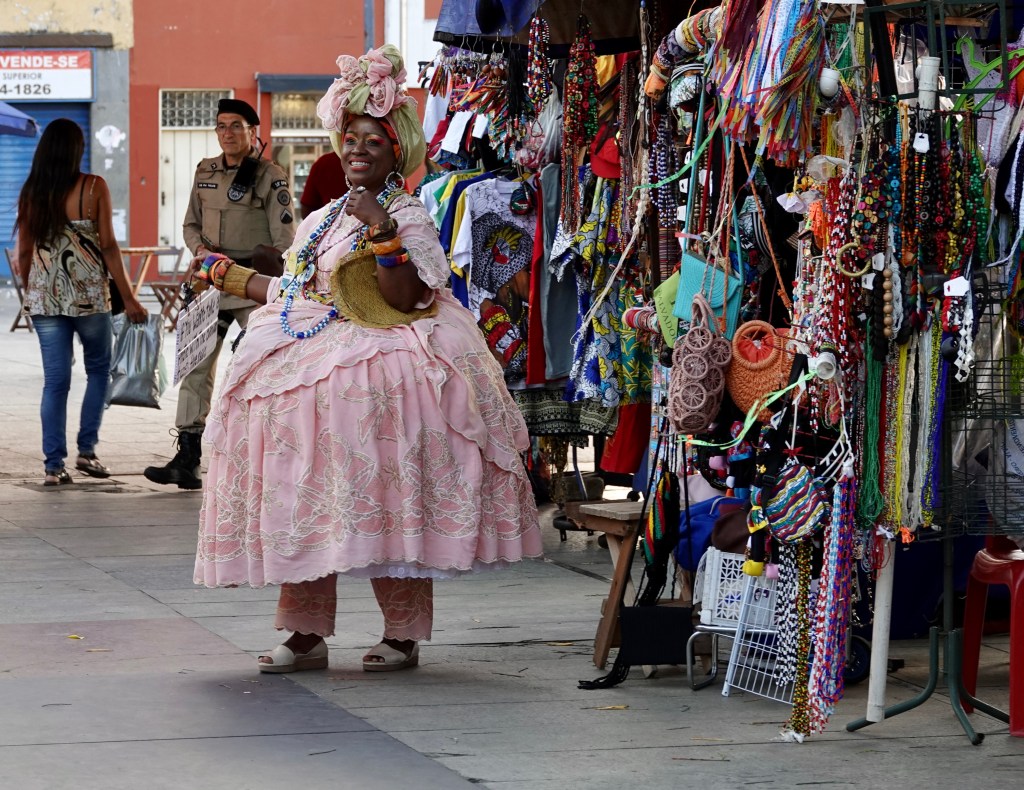
I wandered about a bit, enjoying the very different atmosphere with a Capoeira band and performers playing and general sense of ease and relaxation. The whole area is full of cultural venues such as dance studios and artists shops. Some of the side streets had also been restored and proved to be alarmingly photogenic – as were some of the ladies who had dressed up in historic costumes and would happily have you pose with them for a small donation
.

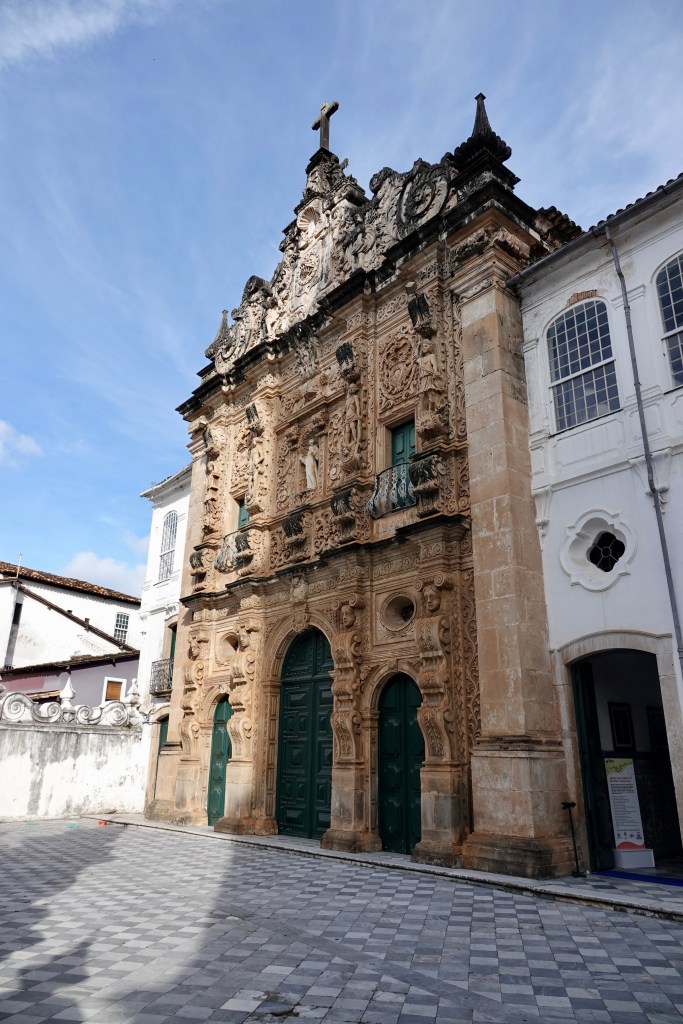
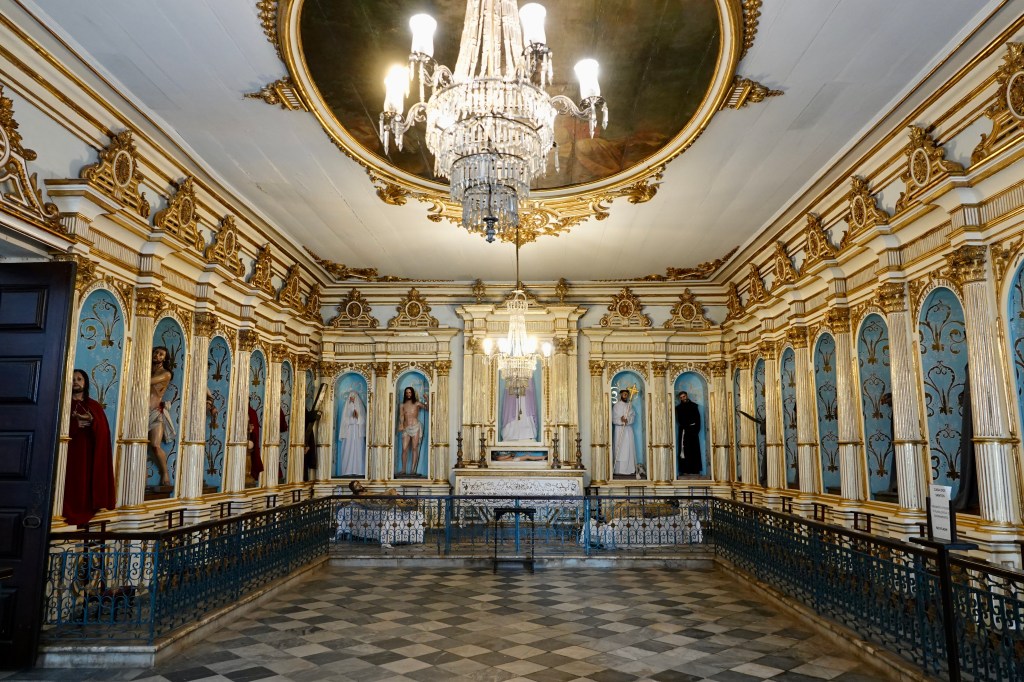
I found myself eventually in front of the facade of the St Francis Church and Convent, which is a very fancy one as you can see from the photo below. I paid my small fee and entered and it was another splendid example of 18th Century Baroque. The complex was completed in 1723.
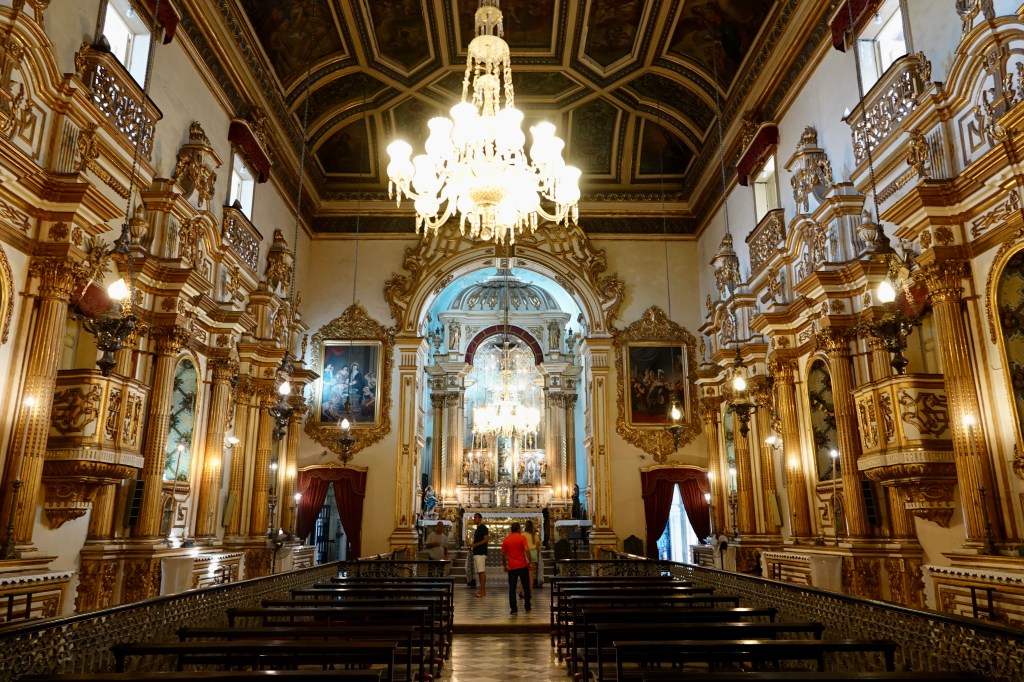
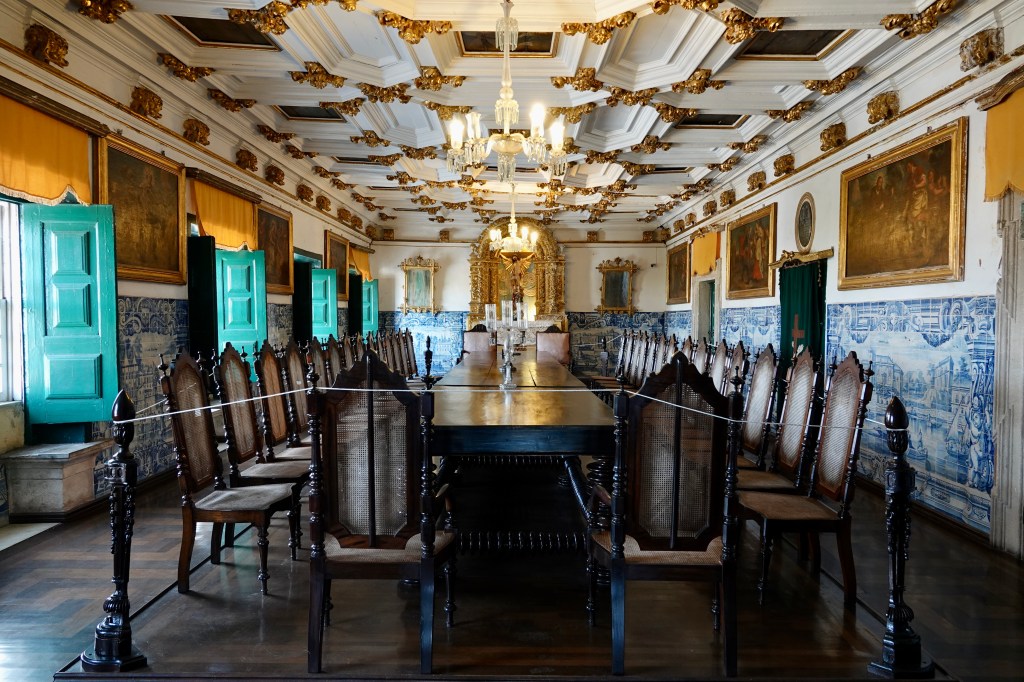
It was then a case of more wandering about. I have to tell you that, once again, this selection is just the tip of the iceberg and more photos are available to anyone who so wishes…
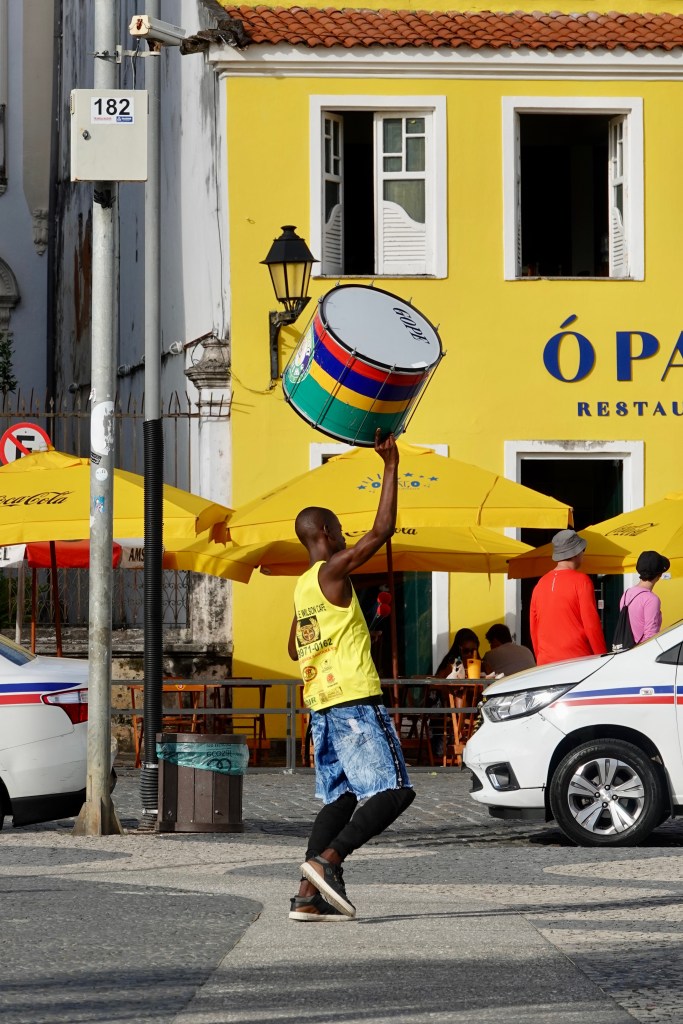
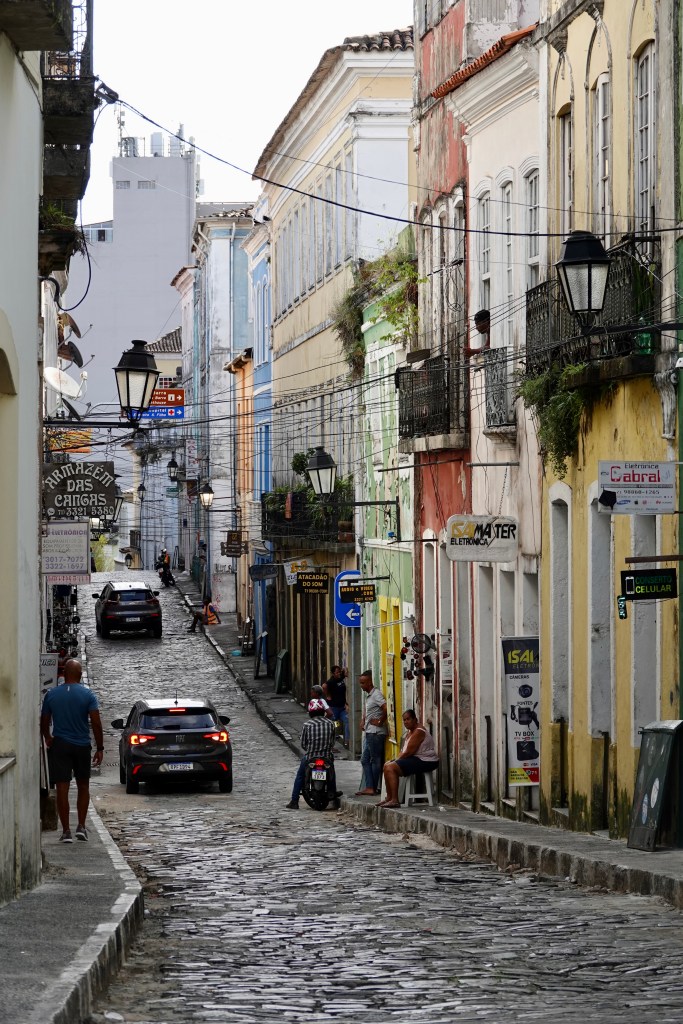

I joined up with Donald and Ray again and, after a small (Ok, a large) beer, we headed towards one of the views from the Upper City..
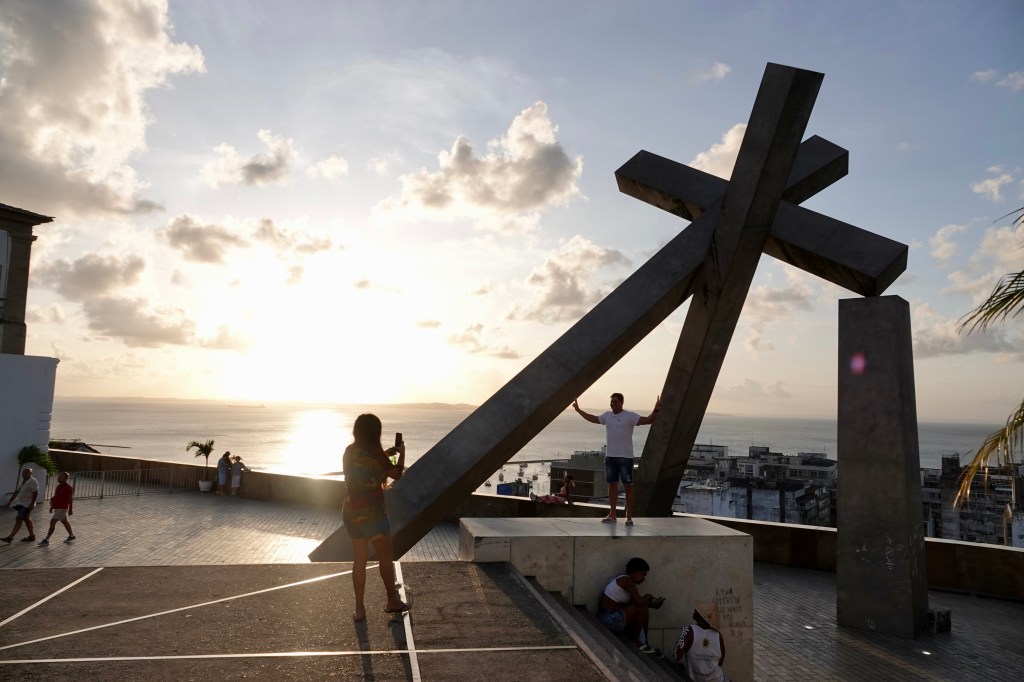
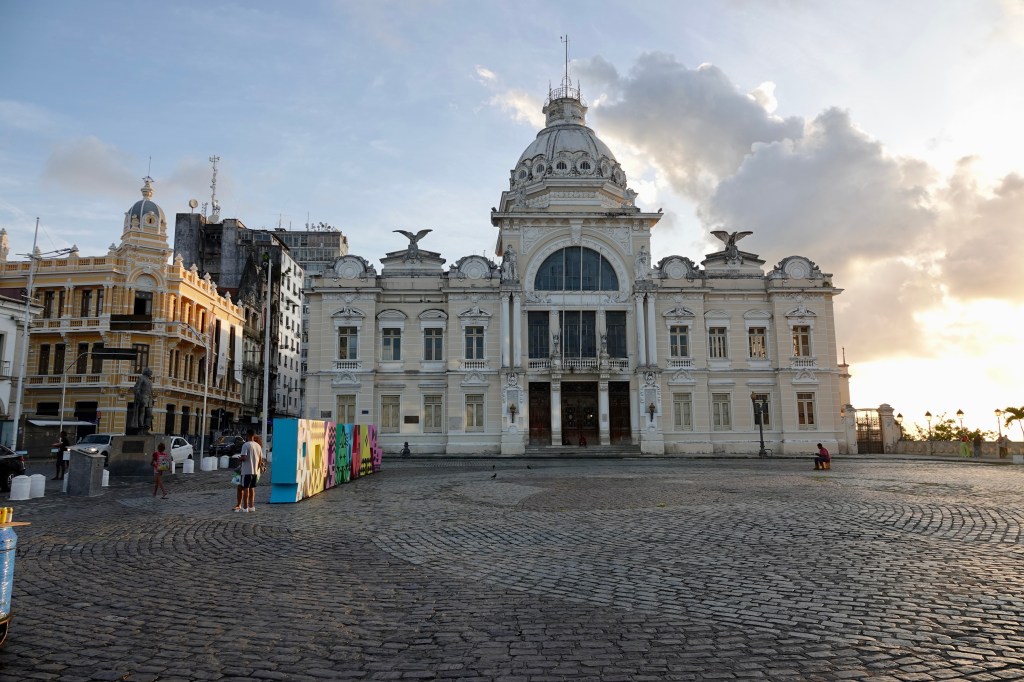
Definitely one of the highlights of the voyage and highly recommended if you happen to be in the area.

 Mr Benn's Blog
Looks really attractive! Love all the restored buildings. Presumably St Francis was built by the Jesuits? It looks their style! Like a number of the places you have been too, it looks very uncrowded with few cars – Or is that because you are there on a Sunday – I’ve lost track! You are right about the contrasts!
LikeLike