22nd February, 2020
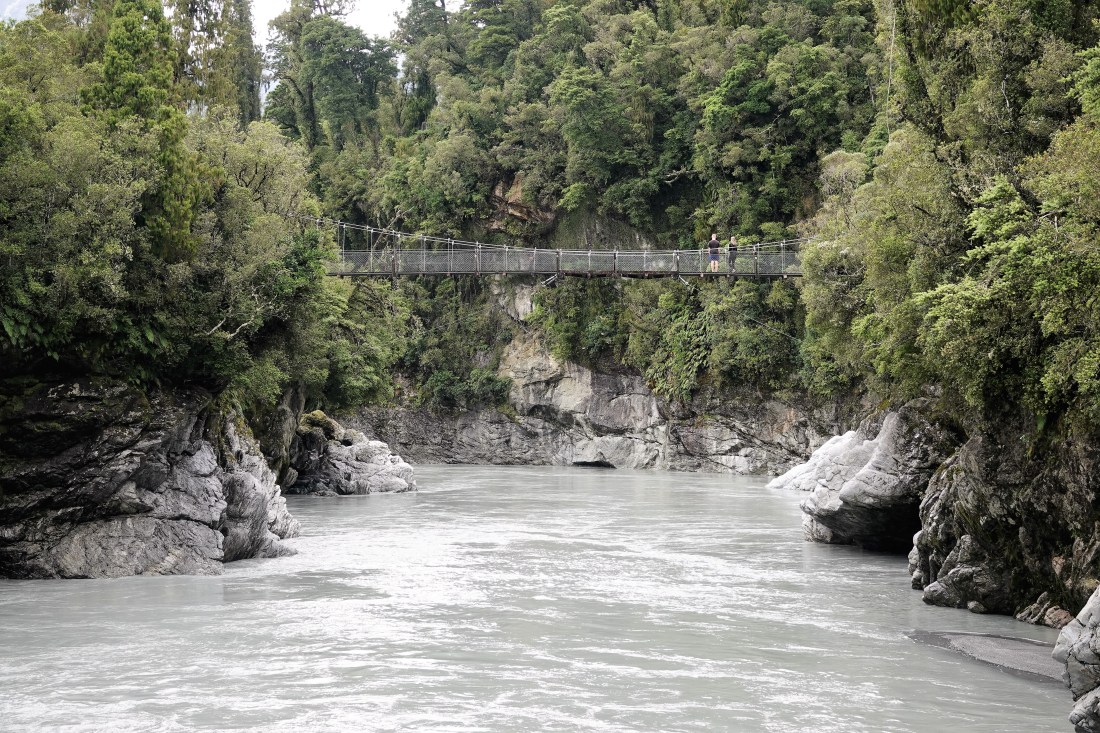
We set off the next morning on a bit of a detour to the Hokitika Gorge, which had been well advertised on TripAdvisor as a good spot to visit, not least to see the milky blue-green waters of the Hokitika River as per the photo below that I have lifted from someone’s website. Looks fantastic, doesn’t it?
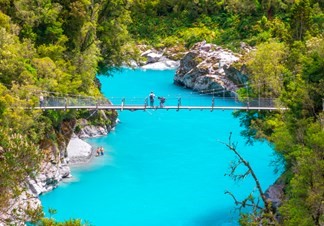
The Gorge was about a 25 minute drive from Hokitika itself with a 15 minute walk through some lovely woods. Now you will remember the rains we went through the day before. Well, they unfortunately had the effect of turning the milky blue-green waters into a sort of milky slate grey colour instead. Still it was a nice walk and we got to walk on some very bouncy bridges – and it wasn’t raining, which was good.
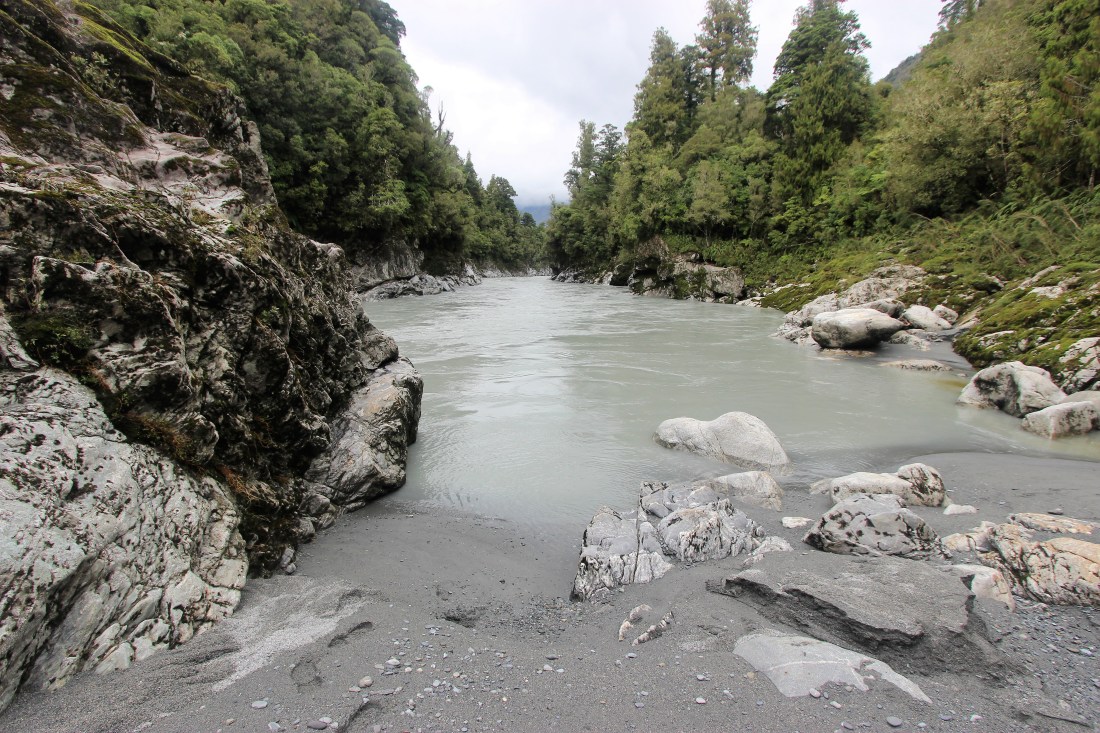
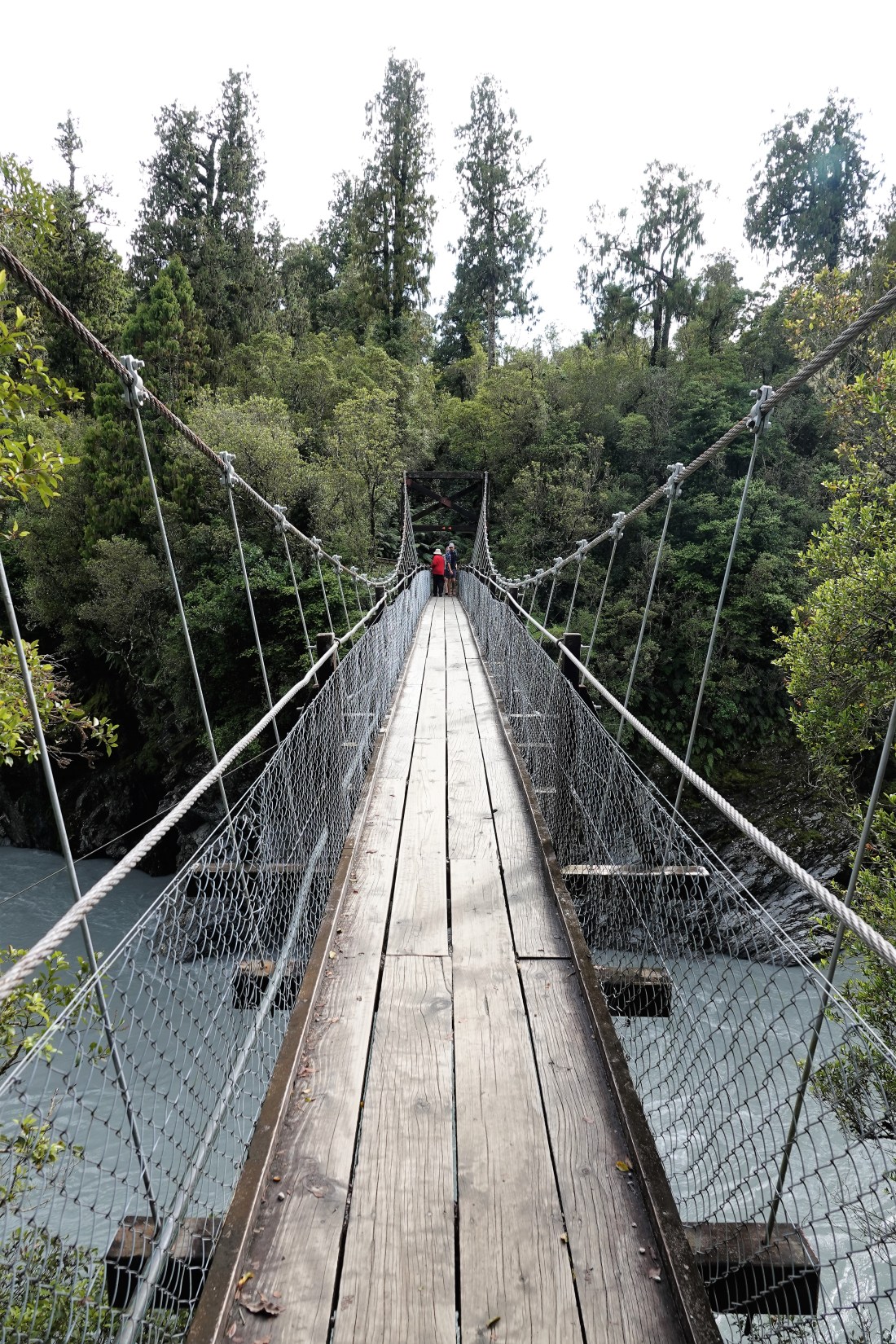
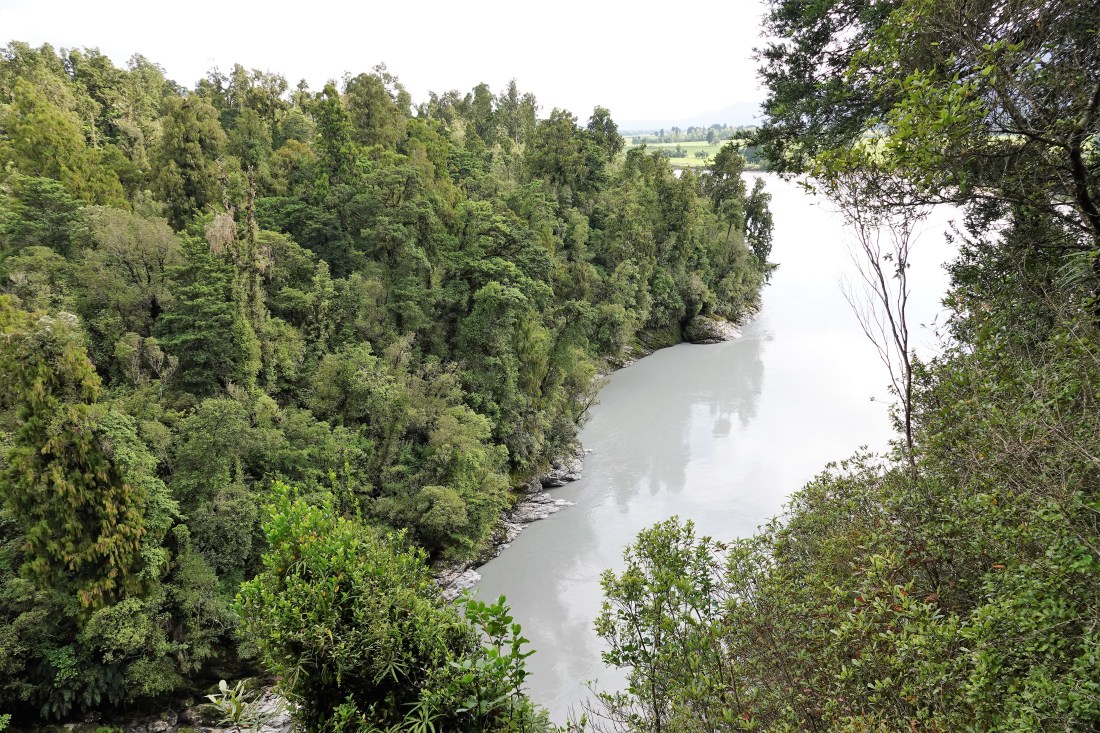
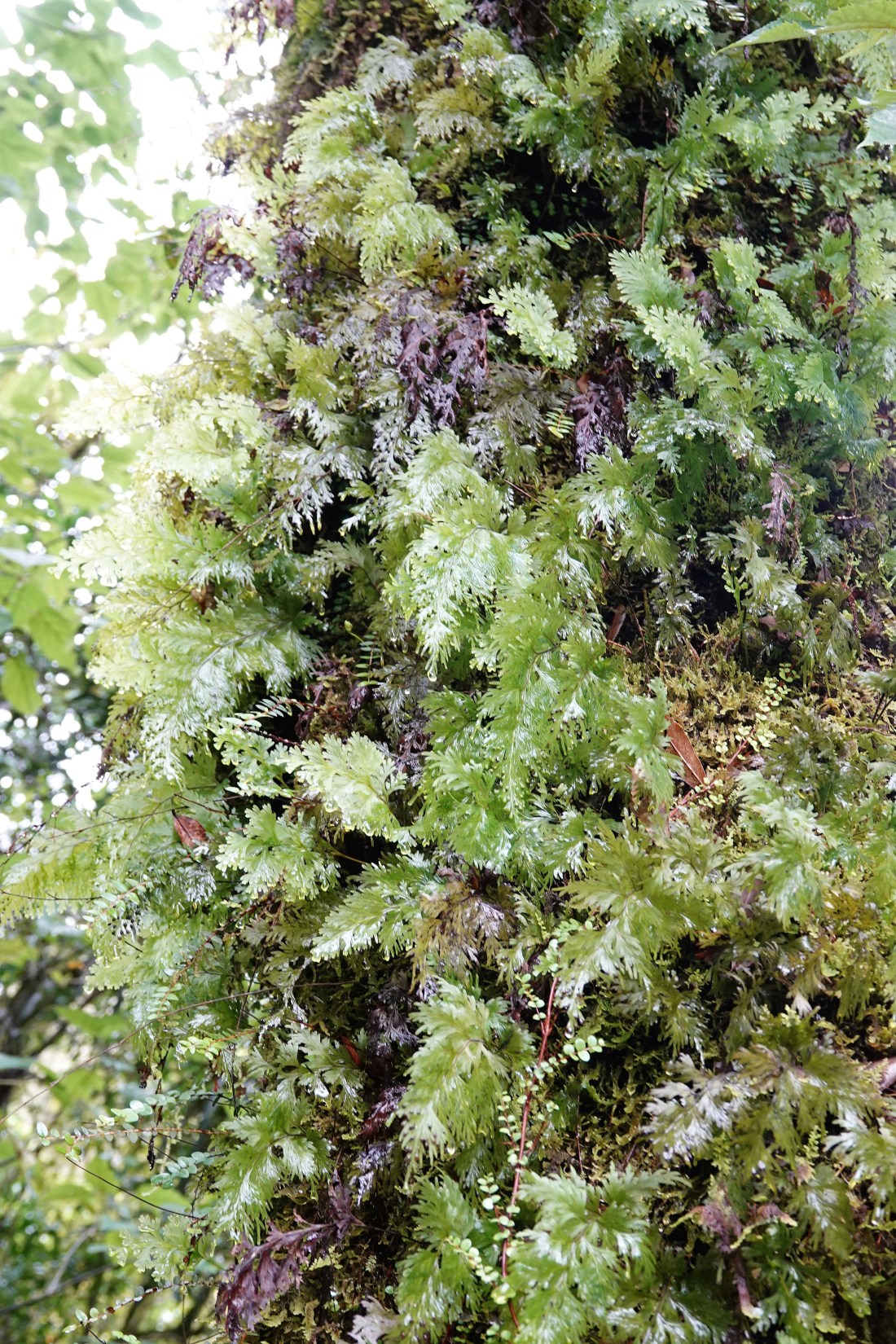
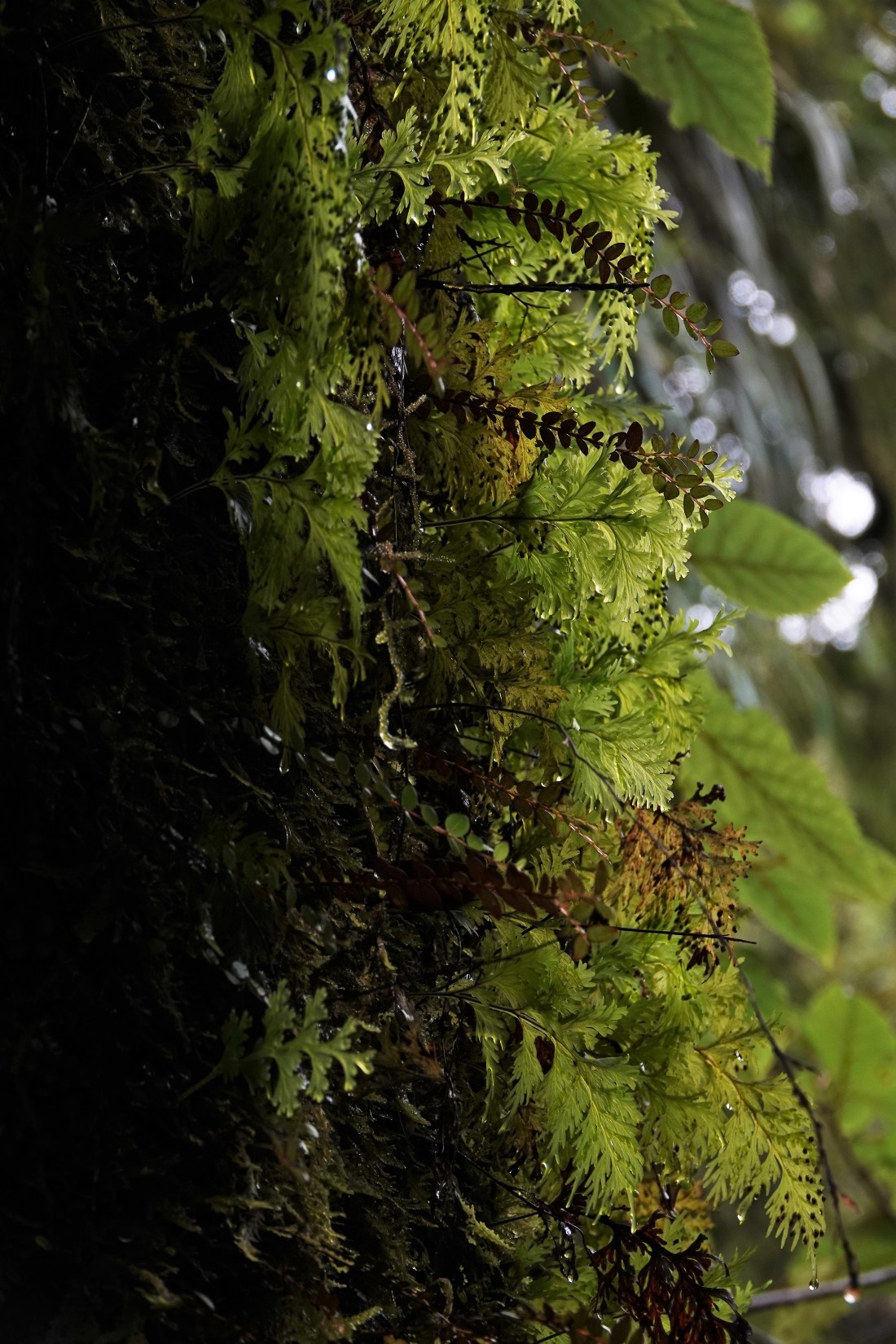
We did walk through quite a lot of woodland in the course of the trip, all of which was very atmospheric (with the emphasis on the moss!). I will try to give a flavour of it without overdoing it as one fern/tree/dappled moss is going to look a bit the same to you guys, I suspect. Anyway, here is a flavour, starting with some ferns growing on trees. I hope you lichen it (haha)…
We then drove back to Hokitika for brunch, which was delicious and headed south along the coast to our next destination, the Franz-Josef Glacier. Now you might be wondering what the late Emperor of the Austro-Hungarian Empire has to do with New Zealand and I can tell you that there was a Prussian-born geologist, Julius von Haast, instrumental in the early geological surveys of New Zealand, who decided to name it after the Emperor.
We had visited the glacier on our previous trip in 1985, so I was interested to see what had changed. As I recall we were able then to walk a long way up the river almost to the glacier itself. We arrived and could at least catch a glimpse of the glacier, though the clouds were once more lowering.
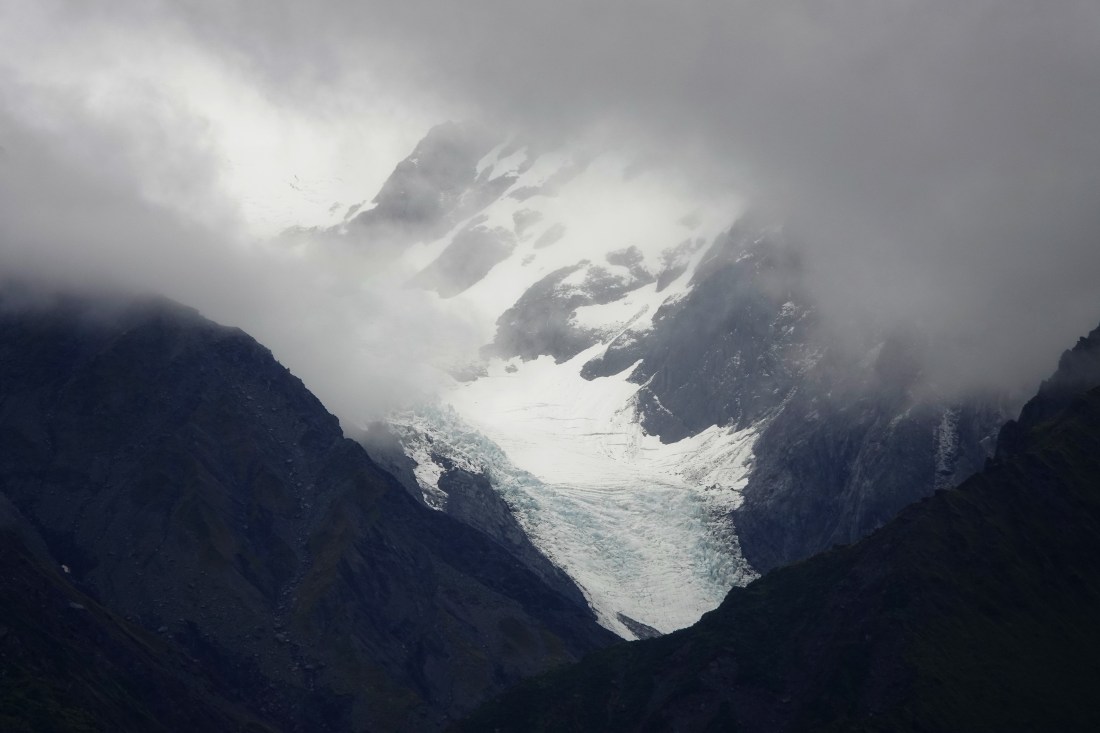
We walked along the track, but had been told that we would not be able to walk as we did before, It appears that the glacier had still been advancing until 2008, but has been in rapid retreat since then. As Wikipedia advises ‘Franz Josef Glacier had periods of advances from 1946 to 1951 (340 m), 1965–1967 (400 m), 1983–1999 (1420 m) and 2004–2008 (280 m). The glacier advanced rapidly during the Little Ice Age, reaching a maximum in the early eighteenth century. Having retreated several kilometres between the 1940s and 1980s, the glacier entered an advancing phase in 1984 and at times has advanced at the phenomenal (by glacial standards) rate of 70 cm a day. The glacier was still advancing until 2008, but since then it has entered a very rapid phase of retreat. As is the case for most other New Zealand glaciers which are mainly found on the eastern side of the southern alps, the shrinking process is attributed to global warming.
The photo below gives you some idea of what we were able to see…
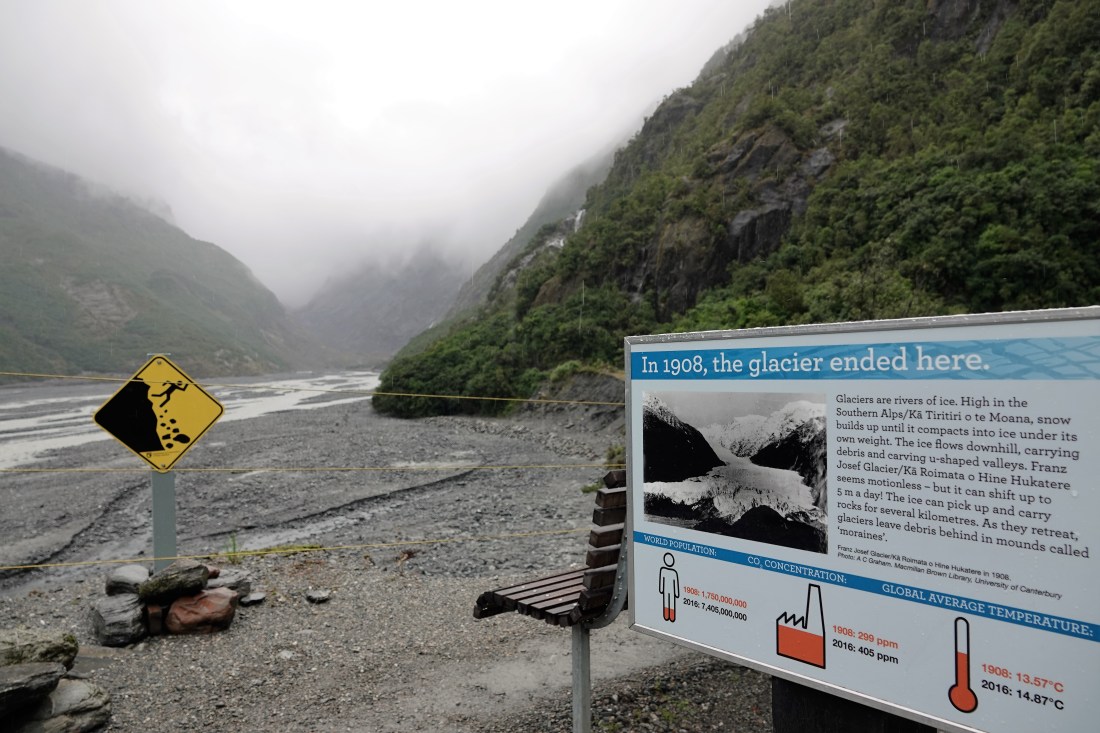
I believe that some of the track for getting a closer view of the glacier had also been damaged, but all in all, a bit disappointing. That said it was not really the weather for it, so we beat a retreat and headed on down the coast to the next famous New Zealand glacier, the Fox Glacier. The road to this one had been virtually destroyed and we were not up for long hikes so we checked into the hotel and rested up before dinner.
We were recommended to travel a couple of kilometres down the road to a cafe/restaurant next to Lake Matheson, where the food was supposed to be excellent and you could get good views of the mountains, especially Mount Cook, the highest peak in New Zealand (12,218 feet as of 2014). We motored on down to check it out and to book a table for dinner and indeed the view did look promising, if somewhat cloudy at this stage. The good news was that it definitely had improved by the time we sat down for dinner, much helped by the fact that the restaurant had big glass windows overlooking the mountains, which gradually started to reveal themselves as the clouds were blown away. The result of this was that the customers enjoying their (excellent) dinner were hopping up and down and dashing outside every 5 minutes as an even better view revealed itself – especially when the iconic Mtt Cook appeared. We could have done with a revolving door! Here is a very small offering, but if data storage was not against me I would be tempted to provide a time-lapsed series to show the unfolding scenario.
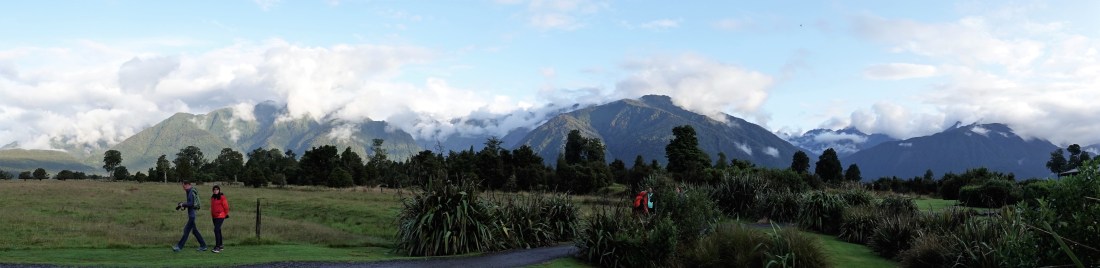
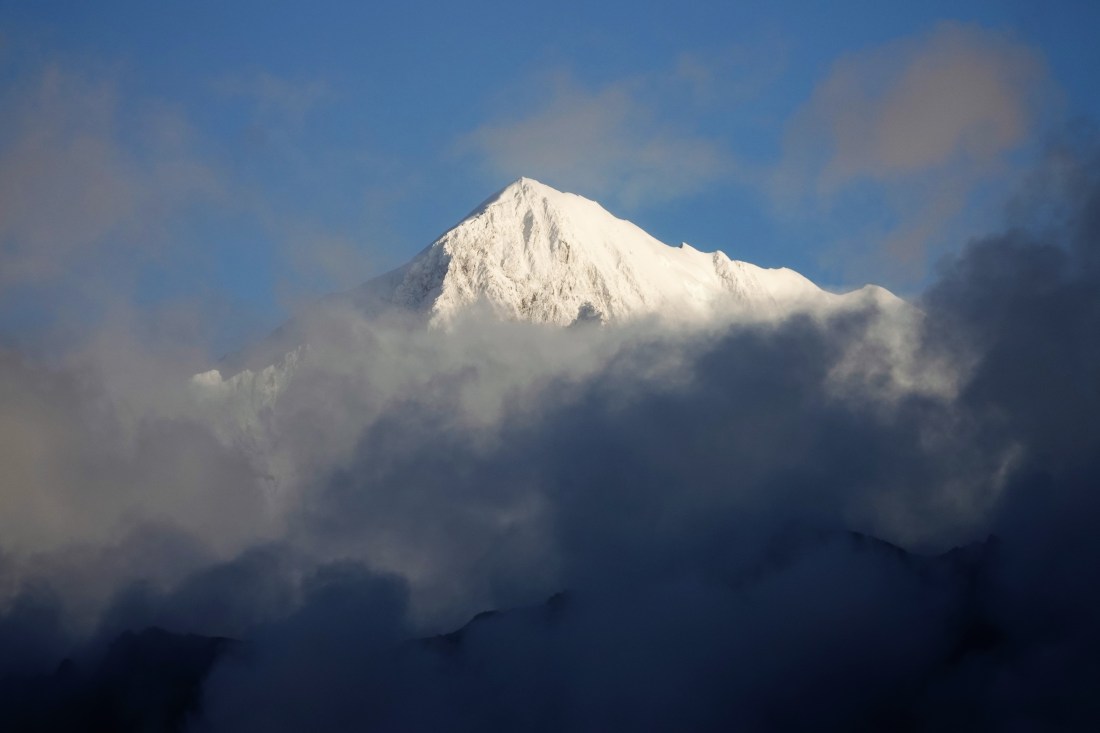
And guess what, we had a sunset of sorts, which helped light up the mountains but also lit up the grass to provide some lovely golden colours – so you have a bonus!

Wow, another post complete. I might actually be catching up. Next up is the Road to Wanaka (a lesser-known Crosby-Hope film).

 Mr Benn's Blog
Shame about the grey/green greasy Limpopo! Loved the tree ferns though and the photograph of Mt Cook is spectacular! (As is the golden sunset, of course!!)
LikeLike
Wow these photos are amazing!!!
LikeLiked by 1 person
Thanks, it is an amazing country!
LikeLiked by 1 person
Very cool post! We are Marlena and Kurt, very nice to meet you! VERY much enjoyed the pictures. We too were in NZ, back in 2018 for a full month. The south island is a nature lovers paradise. We cannot wait to go back! Did you get to do a heli-hike in Mount Cook? If not, check out our Mount Cook post, it is OUT OF THIS WORLD!! Such an amazing experience. I realllllly love that picture of the Franz Josef Glacier. WOOOOW. =)
LikeLike